
More than 2,000 Jews, most of them Chabad Hasidim from the United States, Israel and Europe, arrived in recent days in the city of Almaty (formerly Alma-Ata) in Kazakhstan.
In the Muslim country, whose territory is the tenth largest in the world, approximately 21 million people live, most of whom belong to Sunni Islam.
The visitors endured long journeys, with layovers in Muslim countries along the way - the United Arab Emirates, Azerbaijan, Turkey and Uzbekistan - because there are no direct flights from Israel to Kazakhstan. Only hundreds of them traveled on a special direct charter flight from Ben Gurion Airport.
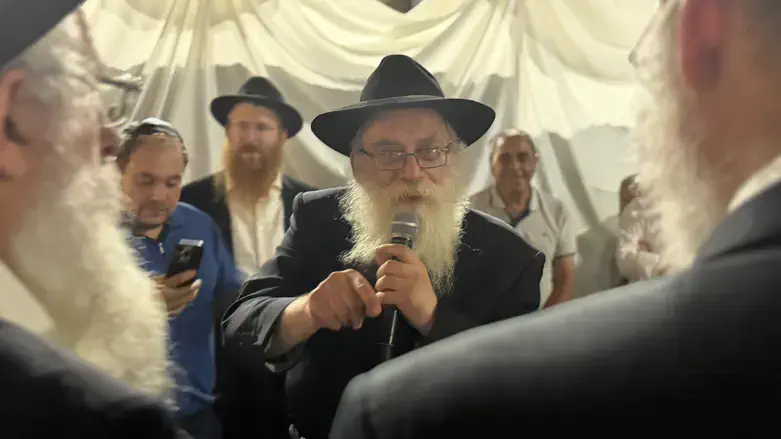
Rabbi Yeshaya Cohen, Chabad emissary to Kazakhstan and the country’s chief rabbi, explained to Arutz Sheva-Israel National News that the thousands made the difficult journey in order to mark the anniversary of the passing of the father of the Lubavitcher Rebbe.
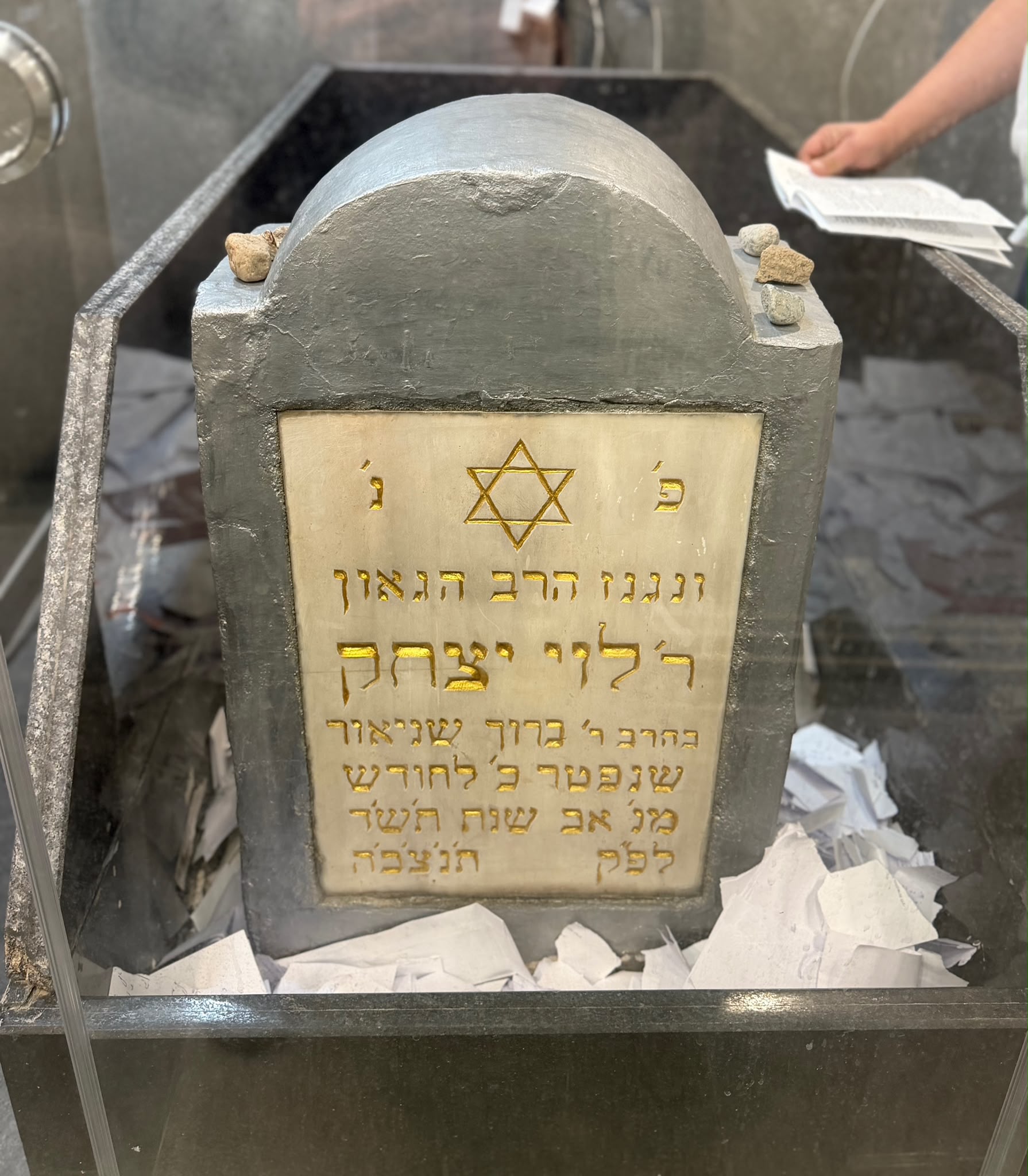
“Yesterday, the 20th of Av, marked the 82nd anniversary of the passing of the holy and Kabbalist Rabbi Levi Yitzchak Schneerson, of blessed memory. Not everyone may know his name, but his son is known throughout the world: the Lubavitcher Rebbe. Rabbi Schneerson spent the final five years of his life here and was buried here, and this is the reason for the arrival of the Hasidim."
Did Rabbi Schneerson choose to live in Kazakhstan?
“No. It was not his choice, and it involved tremendous suffering. Rabbi Schneerson served for 30 years, until 1939, as the rabbi of Dnipro, the second-largest city in Ukraine, which at the time was called Yekaterinoslav. During his rabbinic tenure, the communists, may their name be erased, came to power and they banned the observance of mitzvot and Torah study.
“Rabbi Levi Yitzchak was not deterred. Together with a small group of Chabad Hasidim and members of the Jewish community, he stood firm - like all Chabad Hasidim who remained in Soviet Russia during those years.
“In 1939, he was arrested and imprisoned by the evil regime and was exiled to the city of Chiili in Muslim Kazakhstan, in order to torment him and distance him from any Jewish community.
“His wife, Rebbetzin Chana, of blessed memory, arrived at his place of exile shortly afterward and devotedly cared for all his needs. She even gathered plants and made ink from them so that he could write his extraordinary Torah insights on Kabbalah, the Torah, the Babylonian Talmud and the Jerusalem Talmud. He wrote them in the margins of the few books he was permitted to take with him. These writings were later published, among other places, in the series of books "Torat Levi Yitzchak."
“After he became ill, and following extensive efforts on his behalf, he was transferred in the month of Nissan 5704 (1944) to the city of Alma-Ata, where he lived near a small group of Hasidim until his passing on the 20th of Av that year."
In those days - and especially in a Muslim country - it was extremely difficult to bring the father of the Lubavitcher Rebbe to burial in a Jewish cemetery.
“Unfortunately, the authorities agreed that he could be buried in a small funeral ceremony in a local cemetery. Over the years, Hasidim came from time to time, with great dedication and self-sacrifice, to visit his grave. Today, many are privileged to come here every year on the anniversary of his passing to pray at his gravesite - and the numbers continue to grow."
When did you arrive in Kazakhstan?
“Thirty-two years ago, after the fall of the Soviet Union, as the Rebbe’s emissary - his father’s emissary. With the establishment of our mission, a "ohel" (a structure built over the grave) was erected at Rabbi Levi Yitzchak’s gravesite, along with proper access routes, for the comfort of the worshippers who come from every sector of the Jewish people.
“For example, last Shabbat there was a group of eight young men from the Religious Zionist community who live in central Israel. They came here on a trip, and when they noticed Hasidim on the plane, they asked what was happening and joined them. It was a special and uplifting Shabbat."
How many Jews currently live in Kazakhstan?
“We estimate that there are between 10,000 and 15,000. They are mainly located here in Almaty, but also in other cities. Today, throughout the country, there are eight dedicated families of Chabad emissaries serving in seven different cities, maintaining vibrant Jewish communities. This is the sweetest ‘revenge’ against those who tried to extinguish the Jewish flame here."
How do the authorities relate to Jews, who are a true minority in the country?
“The attitude is very respectful, and we greatly appreciate it. Kazakhstan is an example of a country of coexistence and brotherhood, and I thank the local authorities and security forces for this.
“A few months ago, Israel’s President Isaac Herzog arrived here and met with me and the emissaries. During his meeting with Kazakh President Kassym-Jomart Tokayev, Tokayev said that Rabbi Levi Yitzchak’s grave is ‘a national cultural site for our people, and I believe it is also a sign of a very positive heritage and cooperation between the two countries.’"
Rabbi Cohen concludes by sharing a message from the very place where Rabbi Schneerson is buried:
“I am privileged to stand on the soil of this city, soaked with the tears of the divine Kabbalist Rabbi Levi Yitzchak, the Rebbe’s father. I recall his life story, his rabbinic courage to fight for Judaism at any cost, the harsh imprisonment when he was taken from his home in the middle of the night just days before Passover, the dark prison cell, and his tortured body that was broken during the difficult exile.
“The NKVD wanted to isolate him, distance him from his flock and break his spirit. They wanted to bury the last spark of Judaism in the Communist wilderness, but nothing could break him.
“Even when he returned from exile broken and weakened and arrived in our city, Alma-Ata, he continued to lead the Jewish community that existed here at the time until his final day.
“Today, standing before his gravestone, one can say clearly: Rabbi Levi Yitzchak - they failed, and you prevailed."