
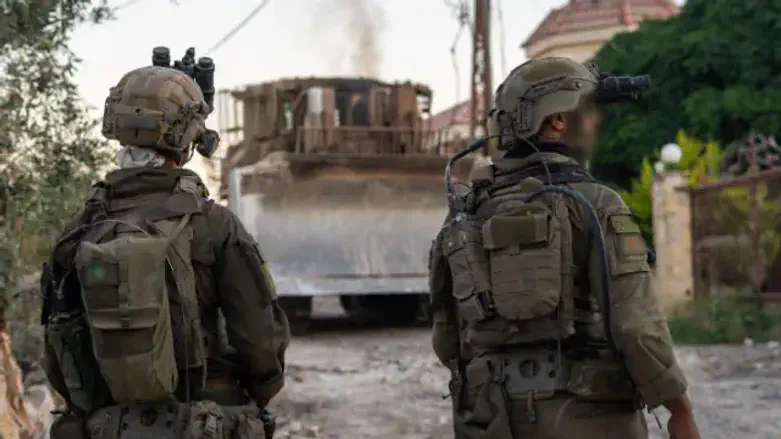
Reservists from the 699th Battalion of the Paratroopers Brigade purchased digital SIM cards (eSIMs) from Lebanese sources during fighting in Lebanon, in violation of orders and without any authorization or reporting, in order to overcome cellular reception problems in operational areas.
According to information obtained by Arutz Sheva-Israel National News, the cards were not used only for private calls, but also for communications in company-level and operational WhatsApp groups during activity in Lebanon - a fact that raised serious concerns over potential harm to the forces’ information security.
An eSIM is a digital SIM card embedded in a cellular device that allows users to connect to a mobile network without the need for a physical SIM card. The technology enables users to quickly switch between communications providers. However, in this case, the cards were purchased indirectly from Lebanese sources, without IDF approval and in violation of regulations.
The use of communications tools purchased in an enemy state raises significant concerns, as they were used for communications by soldiers operating in the heart of a combat zone, including messages containing operational information. Sources familiar with the details assessed that this was not merely an isolated incident and that use of these cards may have been more widespread among battalion personnel.
The use of SIM cards belonging to foreign or hostile entities is known in modern warfare as a method of dealing with limited reception and communications infrastructure in combat zones. Alongside the operational advantage of obtaining available communications, information security experts warn that using such tools without supervision and oversight could expose sensitive information and create serious security risks.
For example, during the war in Ukraine, SIM cards belonging to the opposing side have also been widely used for operating weapons systems and unmanned aerial vehicles.
After the incident was discovered, the battalion commander sent a message to all reservist soldiers asking them to identify themselves and cooperate with the investigation. The message stated that a “mapping process among combat soldiers is being conducted following the purchase of Lebanese eSIM cards and their use during fighting in Lebanon."
The soldiers were asked to provide details of the devices they used, the eSIM card numbers, purchase dates, and additional information that would assist in examining the scope of the incident and assessing possible damage.
The commander clarified that the purpose of the investigation was first and foremost to minimize security damage and understand the extent of the phenomenon, rather than focus on punishment.
From a technical perspective, even when encrypted communication applications are used, the cellular provider cannot view the actual content of messages, but it is exposed to metadata.
This data includes, among other things, the device’s physical location through cellular tracking, network usage times, and communication destinations - such as websites the user connected to or servers with which a connection was established.
This means that even without access to the content of conversations, a hostile actor possessing this data could derive valuable intelligence. For example, it could identify areas where IDF forces are operating, track their movements, and attempt to direct drones, artillery fire, or other weapons toward them based solely on location data.