

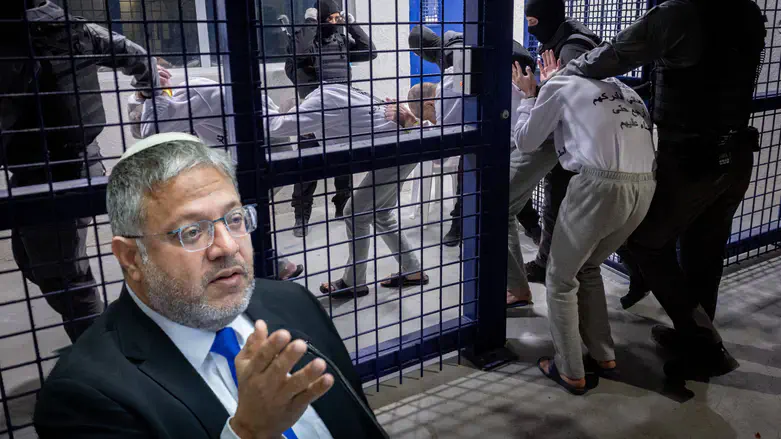
The Jerusalem District Court on Sunday issued an interim order temporarily blocking the state's plan to transfer Nile crocodiles to Ketzi'ot Prison, suspending an initiative promoted by National Security Minister Itamar Ben-Gvir and Environmental Protection Minister Idit Silman.
The decision came just hours after the animal welfare organization Let Animals Live filed an administrative petition and an urgent request to halt the project. Judge Avraham Rubin ruled that, until further notice, the state may not locate the crocodiles or prepare them for transfer. The order will remain in effect until the court rules on the request for a longer-term injunction after the state submits its response by August 16.
Ben-Gvir sharply criticized the ruling, saying, "Once again, during wartime, the judicial system sides with the terrorists and blocks important steps for Israeli deterrence. We know the terrorists are trembling at the arrival of the crocodiles, but the court today came to their aid. Cleaning up the corrupt judicial system is the most critical task immediately after the elections, and we will not compromise on this."
The controversial proposal was unveiled several weeks ago, when construction began at Ketzi'ot Prison on a series of water channels designed to house the reptiles. At the time, the National Security Ministry approved the work, with Ben-Gvir's office stating, "Those who massacred, raped, murdered, and behaved like an animal should have his own kind watch over him."
According to regional officials, the channels are being built within the prison compound around one of the high-security wings and will stretch approximately 170 meters. The project moved forward after Silman signed a declaration classifying the Nile crocodile as a "domesticated wild animal," a move requested by Ben-Gvir to enable security agencies, including the Israel Prison Service, to carry out a pilot program.
Under the proposal, prison authorities planned to use crocodile-filled channels as an additional layer of security around wings housing security prisoners, arguing the measure could strengthen perimeter protection and deter escape attempts.