

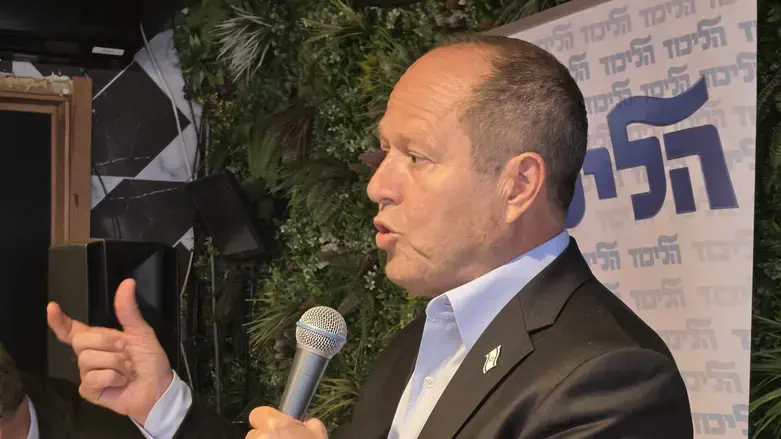
Economy and Industry Minister Nir Barkat told a recent conference in Jerusalem that he had hosted soldiers from the Force 100 special prison unit at his home, where they shared the challenges they faced after months of combat. "Some lost their homes, others left the fighting with very difficult experiences. These are people who carried the security of the State of Israel on their shoulders," he said.
He criticized media investigations into IDF soldiers, saying they unfairly targeted troops serving on the front lines. Barkat also highlighted a legal defense fund established under the leadership of Prof. Moshe Cohen-Eliya to assist soldiers facing lawsuits abroad over their military service. "The fund will stand by every soldier who finds himself in legal proceedings as a result of his military service. This is our duty toward those who defend the State of Israel," he said.
Addressing labor policy, Barkat reiterated his opposition to bringing Palestinian workers back to Israel. Instead, he said the government has expanded the recruitment of foreign workers from countries that maintain peaceful relations with Israel. According to Barkat, about 52,000 foreign workers are now employed in Israel, replacing roughly 24,000 Palestinian workers who were employed before the war. He added that the government is preparing to approve the entry of thousands more foreign workers to help ease labor shortages.
The minister also pointed to Israel's economic resilience despite the war, saying exports reached approximately $169 billion in 2025 and that the economy is expected to grow by about five percent. He said Israel is strengthening economic ties with Asia, including negotiations on a free trade agreement with India, while pursuing regulatory reforms designed to increase competition, expand imports, and reduce the cost of living.
Barkat argued that Israel's military achievements have strengthened its international standing and said many countries are seeking closer cooperation with Israel in fields including security, innovation, high-tech, agriculture, and food technology.
"Never has the State of Israel been stronger and more in demand," Barkat said. "When I meet economy ministers around the world, they tell me they cannot understand the Israeli phenomenon-while in other countries citizens flee during wartime, Israelis have asked to return home even under fire."