

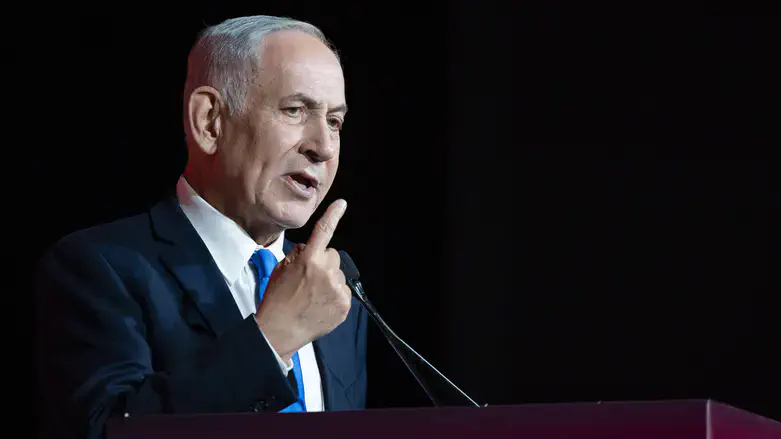
Prime Minister Benjamin Netanyahu voiced strong opposition to the possibility of the US selling F-35 stealth fighter jets to Turkey, following comments by US President Donald Trump indicating that he is considering approving the deal.
In an interview with CNN, Netanyahu argued that such a move would undermine regional stability and reward a government that has repeatedly adopted hostile positions toward both Israel and the US.
"Turkey is not a friendly state to the US," Netanyahu said, describing the government of Turkish President Recep Tayyip Erdogan as "a regime that's infected with the Muslim Brotherhood, which hates the US."
Calling Erdogan "not exactly a model ally of the US," Netanyahu noted that the Turkish leader has repeatedly threatened Israel. "He threatens to destroy my country, the one and only Jewish state," the Prime Minister said.
The remarks come amid heightened tensions between Jerusalem and Ankara. Last week, Turkish Foreign Minister Hakan Fidan claimed that Israel had "become a burden that humanity can no longer bear," prompting Israeli Foreign Minister Gideon Sa'ar to denounce the statement as "textbook incitement to genocide."
Netanyahu warned that supplying Turkey with America's most advanced fighter aircraft would have serious regional consequences.
"This is not a force for peace and stability. When you give them that power, you're going to see aggression in its wake," he said, adding that he had personally urged President Trump not to proceed with the sale because it would "destroy the power balance in the Middle East."
Trump, who is visiting Turkey during the NATO summit, has signaled that he may reverse the prohibition on selling F-35 aircraft to Ankara that was imposed during his first term. The President described Turkey as an "extraordinary" US ally.
Despite the disagreement, Netanyahu dismissed suggestions of a rift between the two leaders, stressing that they continue to share common strategic goals.
"He's the President of the United States. He does what is good for the United States," Netanyahu said. "I'm the Prime Minister of Israel. I do what is important for Israel, and most of the time these things are identical."
Netanyahu said it is too early to determine whether the US-Iran ceasefire agreement will succeed, expressing doubts that negotiations alone can permanently halt Iran's nuclear program but saying President Trump deserves the opportunity to pursue a diplomatic solution. While noting that he remains skeptical, Netanyahu refrained from directly criticizing the agreement despite previously opposing international efforts to negotiate with Iran.
The Prime Minister also took aim at growing criticism of Israel within the Democratic Party, sharply criticizing New York City mayoral candidate Zohran Mamdani over his comments on Israel and accusing Rep. Haley Stevens of attempting to excuse antisemitism. Rejecting suggestions that his own policies have contributed to declining support for Israel in the US, Netanyahu argued that social media has played a major role in fueling anti-Israel sentiment.
Addressing Jewish extremist violence in Judea and Samaria, Netanyahu described those responsible as a small group of "juvenile delinquents" and stressed that violence by Israeli citizens is unacceptable. He said Israeli police and security forces take action against offenders but argued that the courts have been too lenient in punishing those convicted of such attacks.