

Diplomatic talks between Tehran and Washington in Switzerland have advanced past immediate friction over implementation, shifting toward the framework for an eventual comprehensive treaty, Iran's Foreign Ministry said early Monday morning, according to a report in Iran International.
Spokesman Esmail Baghaei revealed that the blueprint for subsequent diplomatic sessions was hammered out over the course of roughly 18 hours of multilateral discussions, which brought together Iranian officials, US representatives, and intermediaries representing Pakistan and Qatar.
Significantly, Baghaei disclosed that the negotiating parties successfully established an operational system designed to guarantee unhindered maritime transit through the Strait of Hormuz.
The general consensus reached by the diplomats will be formalized in an upcoming joint publication distributed by Qatar and Pakistan, according to the statement.
Baghaei noted that while the primary delegations have wrapped up their current session, expert-level technical units are slated to stay behind to hammer out remaining ambiguities and implementation details.
Pakistani Interior Minister Mohsin Naqvi confirmed earlier that a collaborative communique was being drafted.
Naqvi emphasized that the joint declaration will remain under wraps until every participating nation signs off on the wording, signaling that active deliberations persist and a definitive consensus has not been fully solidified.
Qatar and Pakistan subsequently issued a joint statement, saying talks between the United States and Iran concluded in a "positive and constructive atmosphere".
The two countries added that "encouraging progress" had been achieved and announced the creation of a mechanism for further technical discussions.
Iranian Foreign Minister Abbas Araghchi also weighed in on the talks, writing on social media: “Tireless Pakistani and Qatari mediation has delivered major progress to end Lebanon War. Oil and petrochem exports are waived, blockade lifted, some frozen assets released, and major reconstruction & development plan launched for Iran."
He added, “1st real test: Lebanon deconfliction cell."
A US diplomat told Axios’ Barak Ravid earlier on Sunday that the talks with the Iranians in Switzerland started that morning and have been ongoing in different formats almost nonstop.
The diplomat also said one of the issues the talks had focused on during the day was what the official termed “deconfliction mechanisms in Lebanon and enforcing the ceasefire".
The US diplomat added that the US, Iran and the mediators discussed the Strait of Hormuz and the recent Iranian statements about allegedly closing it.
“We made clear we want to ensure it remains fully open. We made good progress on that front," the US diplomat told Ravid.
The source said Sunday’s talks also focused on "all elements of the nuclear deal", adding that the parties had productive talks on implementation of the MOU and how to "make sure everyone is on the same page."
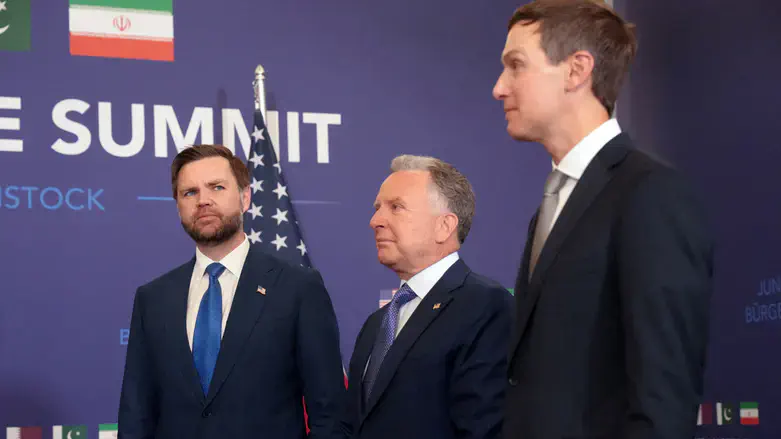
US Vice President JD Vance arrived in Switzerland on Saturday to spearhead the high-stakes talks with Iran.
Acknowledging the fragility of the diplomatic atmosphere prior to his departure from Washington, Vance stated, “I think we're going to hopefully make progress on the nuclear issue, make progress on the Lebanon ceasefire issue. Those are the two big things that I think we're to be focused on."
The groundwork for the summit was laid earlier Saturday morning when White House envoys Steve Witkoff and Jared Kushner arrived on-site, followed later in the day by the Iranian contingent.
A mediation team comprising the prime ministers of Qatar and Pakistan, Pakistan's top general, and the head of the International Atomic Energy Agency (IAEA) is present to facilitate the dialogue.