

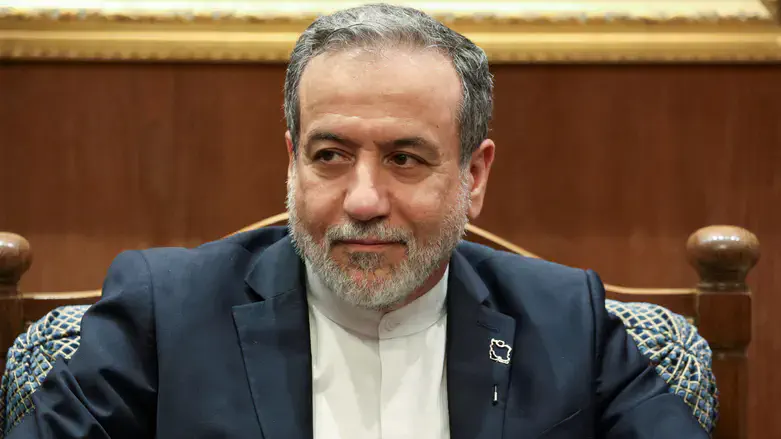
Iranian Foreign Minister Abbas Araghchi announced on Friday that while a definitive peace treaty with the United States has not yet been fully locked in, any final pact will unfold in two distinct phases, strategically shifting the contentious nuclear debate to the second half of the timeline.
Detailing the current diplomatic and military state of affairs, Araghchi confidently championed Iran's defensive position, asserting, "The best time to end a war is when we hold the upper hand; we are truly victorious on the battlefield."
He reflected on the intensity of the recent combat operations, claiming, "We stood against the world's apparent superpower for 40 days."
Addressing the public's need for transparency regarding the highly sensitive and unfolding geopolitical talks, Araghchi emphasized that patience is required but promised total clarity down the line.
"The final agreement hasn’t been reached yet; if it is finalized, I promise to explain every single clause," he stated, further clarified the structural sequencing of the emerging framework, "The agreement includes two stages, and we have moved the nuclear issue to the second stage."
Araghchi also forcefully reaffirmed Iran's unwavering dedication to its regional proxy network and axis of resistance, making it clear that a ceasefire must extend beyond Iran's borders.
"We will never leave Hezbollah in Lebanon alone, and the end of the war will also encompass Lebanon and all other fronts."
He reinforced this regional mandate by adding, "Ending the war in the agreement also means Israel’s withdrawal from the occupied areas in southern Lebanon, and we have stated this explicitly to the other side."
Turning to the specific diplomatic concessions and parameters being carved out in the written documents, the Foreign Minister highlighted a major sovereignty acknowledgment from Washington.
"In this agreement, the United States will state in writing that it respects Iran's sovereignty."
Ultimately, Araghchi sketched out the broad and comprehensive scope of the active framework, which stretches far beyond mere military lines to encompass massive financial and infrastructural components.
"The memorandum of understanding includes the nuclear issue, sanctions relief, reconstruction, and blocked/frozen funds."
Earlier on Friday, US President Donald Trump told Axios’ Barak Ravid that he still thinks a deal with Iran could be signed over the weekend or on Monday.
Later, a senior US administration official told reporters that the agreement with Iran should be signed within days.
"We do expect to be signing this agreement with Iran over the next few days. We assess it at 85%, but not 100%. We feel very good about the deal. We are not quite at the finish line but we are very close," said the official.
The administration official spelled out several points in the prospective agreement. These include the reopening of the Strait of Hormuz and lifting the US blockade on Iranian ports, the dismantling of Iran’s nuclear program, including the United States obtaining Iran’s enriched material, which the official said would be destroyed on site and then taken out of the country.
The official stated that Iran would be “relieved of a lot of the economic pressures that they’ve been under for many, many years" if the country complies with the deal’s provisions. The official further stressed, “Those benefits only accrue if they actually deliver."
(Arutz Sheva-Israel National News' North American desk is keeping you updated until the start of Shabbat in New York. The time posted automatically on all Israel National News articles, however, is Israeli time.)