


A clandestine, high-priority trip to Florida by America's top military officer late last month was triggered by urgent briefings regarding a potential ground assault inside Iran to seize its weapons-grade uranium, CNN reported on Friday, citing two sources familiar with the matter.
The sensitive nature of the strategy required General Dan Caine, Chairman of the Joint Chiefs of Staff, to abruptly exit a NATO summit in Brussels on May 19 and cross the Atlantic to US Central Command. This hasty deployment highlights how close the White House came to greenlighting the high-stakes land operation.
A Joint Staff representative refused to speak on the contingency preparations.
Following the briefings, Caine presented the operational blueprints to President Donald Trump. However, sources state that Trump paused the initiative after being cautioned that it would trigger intense Iranian retaliation, drag out the armed conflict, shake the global economy, and result in a high number of American casualties.
This deep operational planning occurred even as Trump publicly claimed Washington and Tehran were close to finalizing a treaty to open the Strait of Hormuz and settle the nuclear dispute, suggesting a deal could be signed over the weekend. Yet, these internal ground-troop deliberations reveal the extreme proximity of a major military escalation.
“Lots of risk," one of the sources familiar with the plans for the potential military operation told CNN, adding it was not surprising Trump opted against giving the military the green light last month.
Concurrently, three insiders told CNN that Tehran has devised a backup economic "nuclear option" if diplomacy collapses and fighting resumes: directing its Yemeni Houthi proxies to block the Bab-al-Mandab strait. This critical entry point to the Red Sea has become a vital shipping lifeline since Iran sealed the Strait of Hormuz months ago.
Confiscating Iran's highly enriched uranium - specifically around 970 pounds of near-weapons-grade stockpile - remains an elusive goal for Trump, the report said. Although he frequently floats the option of a forced seizure, he hesitates due to the political risk of high American casualties.
Referring to another bloody option - seizing the Kharg Island oil terminal - Trump remarked on Thursday, “I don’t know if America has the stomach for it."
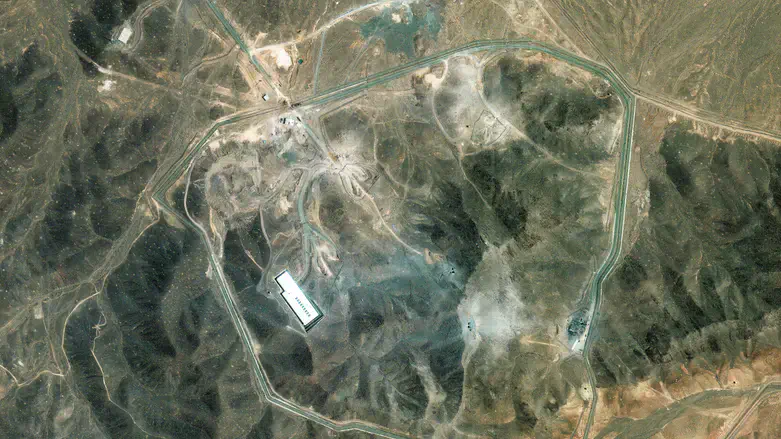
Nevertheless, the extraction mission remains on the table. Trump's impatience has mounted as Tehran delays signing a pact that would force it to surrender its atomic stockpile. Sources told CNN this material is hidden deep within subterranean tunnels across the Natanz, Fordow, and Isfahan complexes.
Nuclear experts doubt an American military operation could successfully locate or safely extract the material under fire, noting it likely remains in gas form, as last logged by the International Atomic Energy Agency (IAEA) in June 2025. Iran blocked international oversight the following month after combined US-Israeli bombings damaged the infrastructure but left the buried stockpiles intact.
IAEA Director-General Rafael Mariano Grossi recently cautioned that this remaining cache could provide Iran with up to 10 nuclear warheads if weaponized. Still, US intelligence remains confident in its tracking via continuous aerial surveillance. Beyond this highly refined stock, Iran possesses lower-grade materials capable of creating a "dirty bomb," though talks remain centered on the near-weapons-grade cache.
Executing a seizure would necessitate an immense ground force, including hundreds of elite commandos.
“It would be insanely difficult to fish through those tunnels and all the barrels," one source said. “We’d have to set up a massive presence. Essentially, we’d have to invade."
Pentagon leaders classified the mission's risk level for special operations forces as "High to Extreme," signaling severe casualty projections even in a successful outcome.
With Iran's conventional military heavily degraded, the primary threats to invading US forces would be booby-trapped storage tunnels, shoulder-fired weaponry, surface-to-air missiles, and a substantial remaining arsenal of ballistic missiles and drones. General Caine and defense officials previously warned that a protracted ground campaign would dangerously deplete American arms reserves and severely harm overall military readiness.
(Arutz Sheva-Israel National News' North American desk is keeping you updated until the start of Shabbat in New York. The time posted automatically on all Israel National News articles, however, is Israeli time.)