

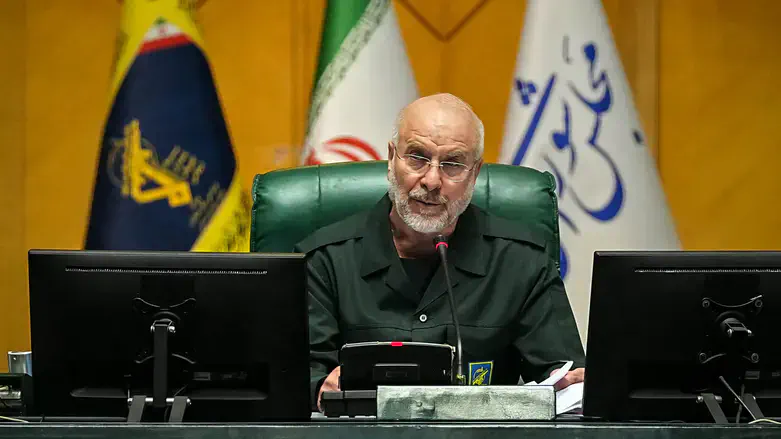
The speaker of Iran’s parliament, Mohammad Bagher Ghalibaf, asserted on Monday that Tehran is completely undeterred by the potential breakdown of diplomatic discussions with the United States.
Ghalibaf explained that Tehran views defense maneuvers and statecraft as interconnected tools rather than mutually exclusive choices.
“Neither diplomacy prevents military operations, nor do military operations prevent diplomacy," he said. “At one point, with the threat of an attack and cutting off negotiations, you prevent Israel’s attack on Beirut. At another point, with an attack, you show that you are not afraid of negotiations being cut off and that you are fully prepared."
The legislative leader rejected the idea that the Islamic Republic must choose between armed conflict and diplomatic engagement, emphasizing that the regime intends to employ both tactically depending on the situation.
“So it is not that we are supposed to either fight or negotiate," Ghalibaf added. “Rather, we are supposed to fight when it is time, and negotiate when it is time. This is how we can defeat the enemy. This is how, when we say negotiation is the continuation of struggle, it becomes real."
He underscored that the regime enters talks from a position of strength, maintaining deep skepticism regarding American intentions.
“The hands of our armed forces are always open for action," he said. “Our goal is to end the war and create lasting security, not fireworks in relations with America. We also have no trust in the other side."
Turning his attention to the American naval blockade of Iran, Ghalibaf branded the maritime restrictions an international war crime, vowing that Iran would successfully overcome the embargo.
The rhetoric came after Iran violated the ceasefire on Sunday, firing missiles towards northern Israel. Israel retaliated by striking targets in Iran. However, both sides on Monday indicated their intentions to end the hostilities, after US President Donald Trump ordered Israel and Iran to cease firing at each other.
Meanwhile, the fate of the ongoing negotiations between the US and Iran remains unclear. As recently as last Wednesday, Trump commented on the talks and speculated that a deal could be reached within days.
“I hear the negotiations with Iran are going very well. If a deal happens with Iran it could be done over the weekend," Trump told reporters, adding that Iran is “close" to signing the papers.
Trump stated he wants Iran’s enriched uranium transferred into US hands and expects that to happen in the near future.
However, Mohsen Rezaei, a top military advisor to Supreme Leader Ayatollah Mojtaba Khamenei, told CNN on Friday that the diplomatic track with the US has stalled.
Rezaei asserted that “the negotiations are at a deadlock and (US President Donald) Trump must break this deadlock," adding that “the ball is in Trump’s court."