

Federal authorities have escalated the legal proceedings against a California man accused of an assassination attempt on President Donald Trump at the White House Correspondents' Association dinner, The Associated Press reported.
On Tuesday, a grand jury in Washington, D.C., returned a new indictment against Cole Tomas Allen, 31, formally adding a charge of assaulting a federal officer with a deadly weapon.
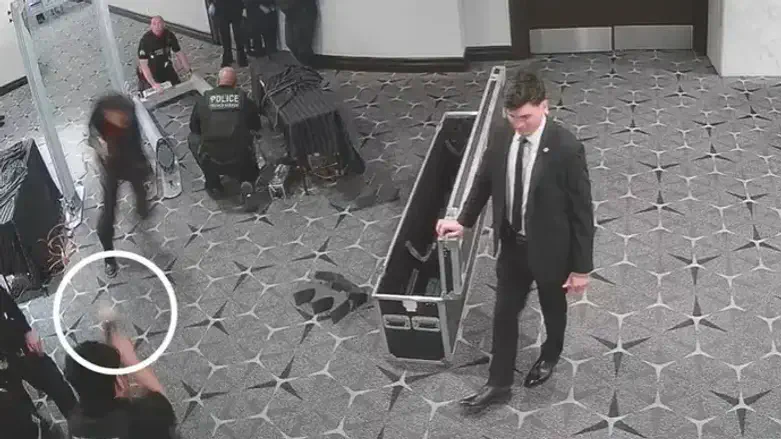
The update follows the chaotic events of April 25 at the Washington Hilton, where the annual White House Correspondents' Association dinner was disrupted. Allen, a resident of Torrance, California, stormed a security checkpoint while heavily armed, targeting the President and senior administration officials.
While Allen was initially charged with attempted assassination and firearms violations, the new indictment includes the specific charge of assaulting a federal officer. This addition formalizes the government's conclusion that Allen fired the shot that struck a Secret Service officer in his protective vest.
Although investigators previously sought more ballistics clarity, the grand jury's decision underscores the belief that the defendant utilized his 12-gauge shotgun against law enforcement.
During the confrontation, Allen reportedly sprinted through magnetometers toward the ballroom where the President was located. One officer was struck in the chest but was saved by his ballistic vest; that officer subsequently fired five rounds, though no one was hit by the return fire.
Attorneys for the 31-year-old have pushed back against the severity of the charges and the prosecution's narrative. The defense team argues that the government is relying on shaky conclusions regarding their client's motives and the mechanics of the shooting.
Following his arrest, Allen was placed on suicide watch, a status that jail officials recently lifted. His legal representatives have filed complaints regarding his treatment in custody, alleging that he was subjected to "unnecessary" conditions, including being held in a padded room under constant 24-hour lighting and being placed in restraints during movements outside his cell.
If convicted of the attempted assassination charge alone, Allen faces a potential sentence of life in imprisonment. The investigation, led by the FBI and the Secret Service, remains ongoing as the case moves toward trial in federal court.