

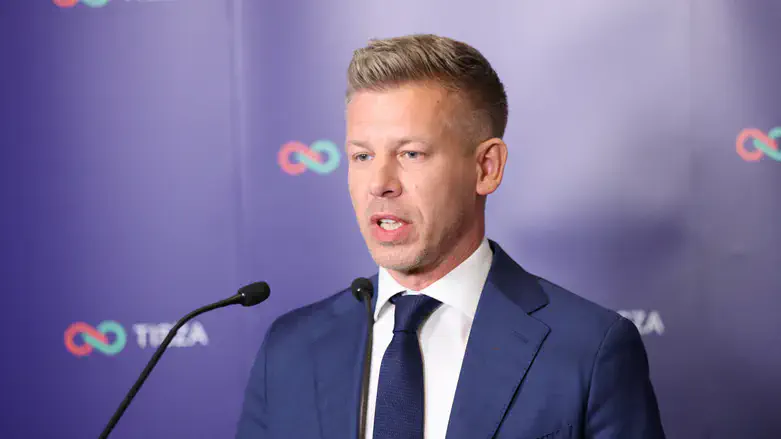
The elections in Hungary this evening are strongly indicating the end of a 16-year tenure for prime minister Viktor Orban. With roughly half of the ballots counted, the party led by opposition figure Péter Magyar is projected to secure 136 out of 199 seats in parliament - a commanding lead that surpasses the two-thirds majority threshold of 133 seats.
Such a result would give Magyar’s party the power to amend the constitution and push through sweeping reforms, potentially reversing controversial policies enacted during the 16-year rule of Prime Minister Viktor Orbán.
In contrast, Orbán’s ruling Fidesz party is currently projected to win just 63 seats.
Magyar said Orbán had already called to congratulate him on the victory. In a public statement, Orbán acknowledged the outcome, saying, “The results are clear and they are painful for us. I congratulated the party that won. We will continue to serve the people from the opposition."
Speaking earlier from Budapest, constitutional law expert Yaniv Roznai of Reichman University noted that Magyar is not a typical opposition leader. “He comes from within the ruling camp itself," Roznai said. “He is a right-wing candidate, but one capable of replacing the current government."
Roznai explained that many younger voters are motivated by economic concerns and Hungary’s strained relationship with the European Union. “They feel the country is missing out on funding because it does not meet European standards on judicial independence, rule of law, separation of powers, and human rights," he said. Still, he emphasized that everyday issues such as the economy, healthcare, and education remain central to voter decision-making, factors that have contributed to the strong possibility of political change.
Addressing the situation of Hungary’s Jewish community, Roznai described a complex reality. While Orbán’s government is seen as supportive of Israel and aligned with Prime Minister Netanyahu, elements of its political messaging, including associating Magyar with figures like George Soros and Volodymyr Zelenskyy, have drawn accusations of antisemitism.
According to Roznai, a Magyar-led government is unlikely to bring major changes for the Jewish community. “He is also a right-wing figure, opposed to immigration, so policy in that area is not expected to shift significantly," he said, adding that Hungary’s Jewish community remains an important constituency. However, he noted that the future direction of Hungary’s foreign policy toward Israel remains uncertain.