

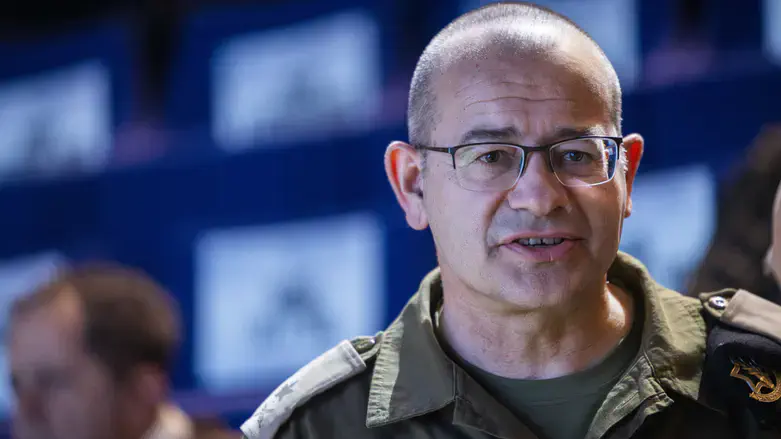
The advisory committee on senior appointments, headed by retired Supreme Court President Asher Grunis, approved on Sunday evening the appointment of Maj. Gen. Roman Gofman as the next director of the Mossad. Grunis opposed the nomination but remained in the minority.
Following the committee’s decision, Prime Minister Benjamin Netanyahu formally signed Gofman’s appointment. He is set to assume the role on June 2 for a five-year term. Netanyahu had first announced his selection in early December.
Gofman has held a wide range of operational and command roles in the IDF. His career includes service as a tank crewman and commander in the Armored Corps, commander of the 75th Battalion in the 7th Brigade, operations officer in the Ga’ash Formation (36th Division), commander of the Etzion Brigade and later the 7th Brigade, head of the Bashan Division (210), commander of the National Ground Training Center, and chief of the Coordination of Government Activities in the Territories.
Two past incidents have drawn scrutiny despite his otherwise distinguished service. In one case, during his tenure as Etzion Brigade commander, Gofman reportedly operated a network of Palestinian informants without the knowledge of the ISA or IDF Military Intelligence, and was later summoned for clarification.
A more serious allegation relates to his time commanding the Bashan Division. According to suspicions, Gofman instructed two subordinate officers to transfer highly classified information defined by the ISA and the IDF as top secret to a 17-year-old from Ashkelon, Uri Elmakayes, who operated a Telegram news channel.
The teenager was later arrested by the ISA and police and charged with treason and severe espionage offenses. At the time of his arrest, authorities were reportedly unaware of Gofman’s involvement. His alleged role only came to light after the indictment, when defense attorneys presented evidence pointing to the senior officer’s independent actions.