

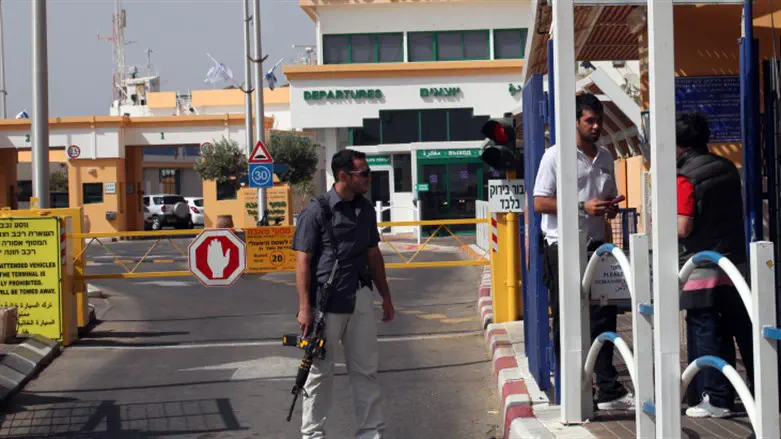
At Taba Border Crossing near Sharm el-Sheikh, haredi passengers have reportedly been delayed for praying and putting on tefillin, according to several individuals who were recently at the site.
“Be very careful to follow Egyptian rules at the airport, because in case of detention-or even just a delay-there will be no one to talk to," warned the Rebbe of Shotz-Ashdod in an interview.
The rabbi, who spends extended periods abroad as chairman of the Badatz Mehadrin kashrut system, said: “I’ve already encountered several cases where passengers were delayed, and it’s important to know to be cautious. At the airport in Sharm, for example, it’s forbidden even to stand for a minute to recite the Amidah prayer-let alone to put on tefillin."
He emphasized: “In such cases, it won’t take two minutes before security personnel arrive and start shouting at the person. Sometimes it ends with more than that-with delays or even arrest."
He clarified that this does not refer to group prayer, but even to an individual quietly standing aside to pray. “A prayer quorum would already be considered a real provocation," he said. In addition, security personnel are highly sensitive to photography. “It simply won’t end well, from experience."
Meanwhile, Avi Maoz, chairman of the Noam Party, sent an urgent letter to Transportation Minister Miri Regev, stating that “recently, my office has received many inquiries from religious travelers about difficulties and harassment at border crossings in Jordan and Egypt due to Jewish and religious symbols."
According to him, in several cases travelers were delayed or even arrested solely for carrying or wearing tefillin, raising concerns ahead of the Passover holiday, when increased travel through land crossings is expected.
Maoz called on the minister to intervene urgently with authorities in neighboring countries to ensure fair and equal treatment of Israeli travelers and to prevent religious discrimination.
Due to the ongoing war and restrictions on flights, many Israelis have been forced to use land crossings through Jordan and Egypt to enter and leave the country. In many cases, reports have described discriminatory treatment, unusual delays, prolonged inspections, and even demands to remove Jewish religious items such as kippahs, tzitzit, and tefillin.