

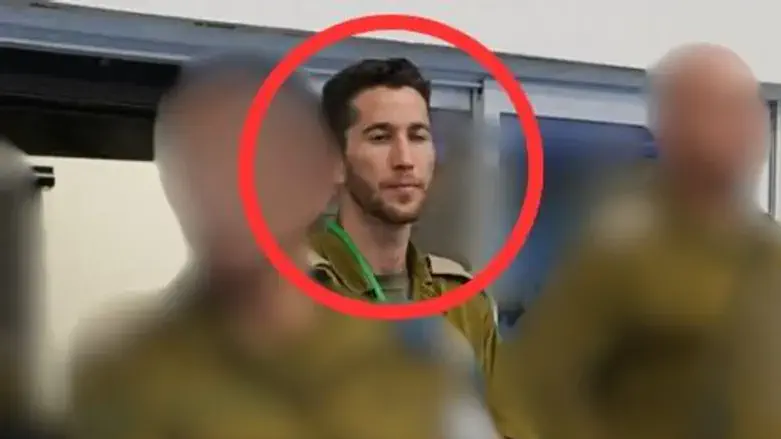
A district court has acquitted Asaf Shmuelevitz of the espionage-related offenses attributed to him in the indictment after determining that he was not responsible for his actions due to insanity.
The panel, headed by Judge Gilat Shalev and including Judges Itai Bresler-Gonen and Fani Gilat Cohen, ruled that Shmuelevitz had been in a psychotic state at the time of the incidents.
According to the indictment, Shmuelevitz, who previously served in the Israel Defense Forces and was discharged with the rank of lieutenant, arrived on his own initiative at IDF headquarters on the morning of October 7, 2023, even though he had not been called up for reserve duty.
He later went to the IDF Southern Command, falsely presented himself as a captain belonging to a special unit, and for about a week took part in discussions and operations rooms, where he was exposed to highly classified information.
According to the charges, the defendant exploited the overload and chaos that prevailed during the first days of the fighting. He gained access to the command operations center and even received appointment letters that allowed him to operate as an operations and special missions coordinator and establish a special activity cell.
The indictment further alleged that he documented classified information, photographed screens and soldiers, recorded details in a notebook, and shared secret information with several civilians and unauthorized individuals.
However, the state emphasized that it was not alleged that the defendant intended to harm national security or transfer information to hostile elements.
During the proceedings, Shmuelevitz was examined by psychiatrists who determined that he had been in a psychotic state during the events, with grandiose delusions and a belief that he could establish a military framework to assist the IDF during the war.
After reviewing the expert opinions, the prosecution announced that it accepted the conclusion that the defendant was not responsible for his actions at the time of the offenses.
The court ruled that although the defendant carried out the acts attributed to him, his mental condition prevented him from understanding his actions or recognizing their wrongdoing, and therefore he is entitled to the insanity defense.
The panel of judges wrote: “The defendant was in a complex mental state at the time of the acts, which deprived him of the ability to understand what he was doing or the wrongfulness of his actions, and therefore he is not punishable due to the legal defense of insanity."
In a separate decision, the court ordered that the defendant be hospitalized in a psychiatric hospital, according to the decision of the district psychiatrist, until further notice.
Shmuelevitz’s family said in a statement: “Today the curtain has finally closed on the espionage conspiracy at Southern Command. We expect public figures, media professionals, and citizens who spread these claims to conduct serious self-examination."