

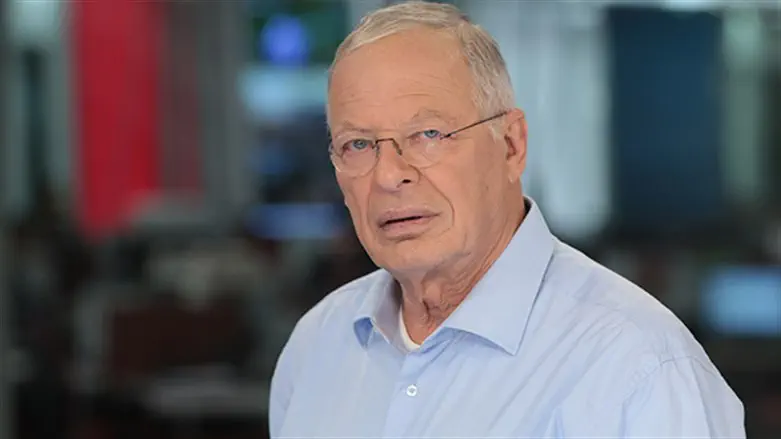
Channel 12 News analyst Ehud Yaari commented Tuesday evening on the rising tensions with Iran, assessing that Tehran is actively seeking to avoid direct military escalation with Israel.
"I am sharing these observations based on my own analysis," Yaari began. "First, Iran absolutely does not want a war. They have no desire to see 400 Israeli Air Force jets attacking in waves. They simply do not possess the air power or advanced defense systems to counter such a threat."
Regarding the recent naval exercises in the Strait of Hormuz, he added: "They conduct these drills during every crisis. They will not close the Strait; they don’t have the capability to do so. They won’t risk creating a global oil crisis, which would only alienate the Gulf states - countries that, until now, have been hesitant to take a firm stance against Iranian conduct."
According to Yaari, Iran is currently testing the boundaries of potential negotiations with the United States. "They are trying to determine the minimum concessions required to satisfy President Trump and his envoys."
He noted that there are proposals on the table to halt uranium enrichment for a limited period, with even the possibility of creating a regional enrichment consortium. "They are signaling a willingness to freeze enrichment for several years. This is a starting point, especially since they aren’t currently enriching at those levels. They are also open to discussing a regional consortium for uranium enrichment, without insisting, for now, that it must take place on Iranian soil."
Furthermore, Yaari pointed out that Iran has allowed International Atomic Energy Agency (IAEA) inspectors to return to its nuclear sites and has even offered the US cooperation in the energy and development sectors.
"They are offering a package of incentives," Yaari said of Iran's proposals. "They are inviting the US to enter the Iranian energy market, leveraging Iran’s vast - and, in many ways, underutilized - oil reserves."
In conclusion, Yaari assessed that a central axis of former Iranian Revolutionary Guard Corps (IRGC) officials is forming within the Iranian leadership, despite the continued hardline rhetoric from Supreme Leader Ali Khamenei.
"We are seeing the emergence of a specific power center in Tehran; the leadership is not a monolith. This axis is becoming the focal point of decision-making. It includes figures like the Speaker of the Parliament and Ali Shamkhani, the Secretary of the Supreme National Security Council - both former IRGC generals. They are becoming the central pivot around which policy is revolving, even as Khamenei continues his characteristic verbal attacks, as he did again today."