

The fall of the House of Assad in late 2024 was heralded by many as a victory for the Syrian people, but for the State of Israel, the transition to an Islamist-led order in Damascus has created a strategic nightmare that is currently culminating in a "jihadi time bomb" on the northern border. The fragile security apparatus that once contained and kept at bay tens of thousands of Islamic State (ISIS) fighters and their families has shattered following the rapid withdrawal of Kurdish-led Syrian Democratic Forces (SDF) under military and political pressure from the new central government.
In a move that defies strategic logic, the United Nations has stepped in to manage the sprawling Al-Hol and Roj detention camps, despite lacking the mandate, capacity, or intelligence networks to secure a population of radicalized "true believers". By transferring these camps to the UNHCR, the international community has essentially created an intelligence black hole where the UN’s humanitarian focus on feeding and housing is blind to the brewing storms of terror being planned within the tents.
The threat is no longer theoretical, as the "ghost caliphate" that ISIS maintained in the Syrian desert is now re-emerging with frightening speed. Intelligence reports indicate that the group has maintained clandestine support networks and is now exploiting the current security vacuum to replenish its ranks through mass prison breaks, such as the recent escape of over 120 fighters from the Shaddadi facility. These escapees are joining an estimated 3,000 active fighters who have successfully stockpiled heavy weaponry seized from the remnants of the old Syrian army.
Perhaps most concerning for Israel is the demographic reality within Al-Hawl, where children who were eight years old when the original caliphate was declared in 2014 have now reached "prime fighting age" after a decade of uninterrupted indoctrination. This is not a refugee camp in the traditional sense; it is a terrorist academy where the next generation of jihadists is being incubated under the protection of UN neutrality.
While the international community engages in a desperate normalization effort with Syria’s new interim president, Ahmed al-Sharaa, Israel remains clear-eyed about the "Sheikh-President’s" true identity. Despite his attempts to present a moderate technocratic face to the West, al-Sharaa is a former Al-Qaeda and ISIS commander who remains deeply tied to the radical Sunni ideology that fuels regional instability.
His government’s commitment to justice has already proven to be a calculated charade, as seen in the recent whitewashing of sectarian massacres against Alawite minorities, which were cynically dismissed as mere "revenge" acts rather than ideologically driven cleansing. An Islamist regime that refuses to confront the sectarian poison of its own base cannot be trusted to serve as a reliable custodian of the "ISIS virus" or as a partner in regional security.
The strategic landscape is further complicated by the deepening influence of Turkey, al-Sharaa’s primary patron, which is attempting to establish a "Sunni Islamist regional axis" inherently hostile to Israel. Ankara is using the Syrian transition to dismantle the only effective counter-terrorism partner on the ground-the Kurds-while replacing them with a force whose long-term goal is the destruction of the Jewish State.
This emerging axis mimics the Iranian model of proxy warfare, but with a Sunni radical flavor that could be even more difficult to contain given its popular appeal among the region's disenfranchised youth.
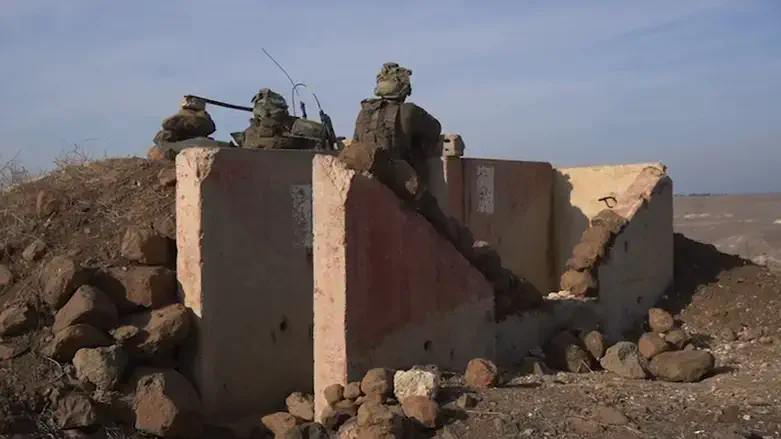
In response to this multi-layered threat, Israel has correctly abandoned the "campaign between the wars" strategy in favor of a heavy-handed and permanent territorial presence. The IDF has already established nine new military posts deep within the Syrian buffer zone and on the strategic heights of Mount Hermon to ensure that jihadi forces cannot creep toward the Golan Heights. Israel has also sent a definitive message to Damascus that any attempt to target minority communities like the Druze in southern Syria will be met with immediate and overwhelming military force.
The current situation demands that the West and the United Nations stop being fooled by political theater and humanitarian platitudes. The "Justice Charade" in Damascus and the administrative incompetence of the UN in Al-Hol are paving the road for a second caliphate that will target Israel and the West alike. Israel must continue to exert its sovereignty and maintain its red lines, ensuring that not a single dollar of reconstruction aid reaches a regime that enables sectarian slaughter or permits ISIS to regroup in its desert hinterlands.
The lesson of the last decade is clear: radical Islam is the problem, and only a position of uncompromising strength can provide the solution. Israel's survival depends on the fortitude of its own iron wall, rather than the hollow promises of a former terrorist emir or the failed bureaucracy of the United Nations.
Amine Ayoub, a fellow at the Middle East Forum, is a policy analyst and writer based in Morocco. Follow him on X: @amineayoubx