

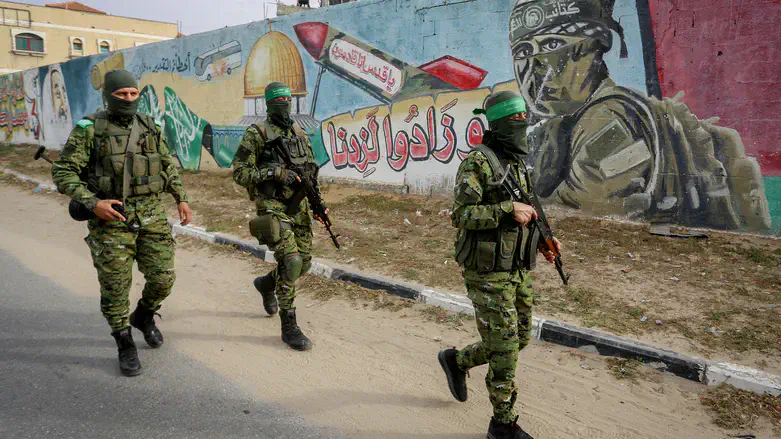
Israel's security establishment is closely monitoring the military buildup trends of Hamas in the Gaza Strip, in anticipation of a potential shift to Phase B of the conflict.
According to intelligence estimates published on Galei Zahal, about three months after the ceasefire agreement, the terror group is continuing to rebuild its capabilities, defying the strict restrictions.
Despite the closure of the Rafah Crossing and the Philadelphi Corridor, and the extended maritime blockade, the IDF has identified three main channels through which Hamas is attempting to restore its strength.
The first channel is the local production of weaponry, which is being carried out on a smaller scale and under harsher conditions than in the past. However, it still allows the production of many explosives, the use of unexploded ammunition, and even attempts to manufacture simple rockets and anti-tank missiles.
The second channel, indicated by IDF sources, is the attempt to utilize humanitarian aid equipment for weapon smuggling. Approximately 600 trucks enter the Gaza Strip daily, and this number is expected to rise in the future. Although there is currently no indication that weapons are being smuggled in the aid shipments, the defense echelon is are aware that Hamas is cooperating with the Iranian axis and its foreign headquarters to leverage aid channels for military purposes.
The third channel is the transfer of drones from Egypt. The security establishment has identified an expanding phenomenon of drones arriving from the Sinai region directly to the Al Mawasi area west of Khan Yunis. Currently, these drones are primarily used for drug smuggling, but there is a real concern that this route will also be used for weapons transfers.