


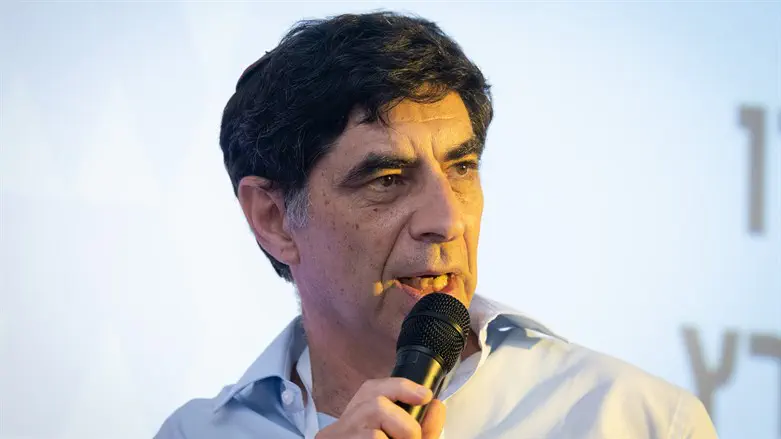
Prof. Simcha Goldin, the father of fallen IDF soldier Hadar Goldin, told Israel's "Meet the Press" about his extended battle to bring his son's body home to Israel for burial.
Hadar Goldin was killed during 2014's Operation Protective Edge, and his body was kidnapped by terrorists. His parents, Leah and Simcha Goldin, fought for 11 years for their son's body to be brought home for burial, but it was only brought home earlier this year as part of a ceasefire deal with the Hamas terror group.
According to the elder Goldin, Hadar became a symbol of the State of Israel, but the way the State treated the families and the soldiers held captive exposed a deep moral failure.
“A decision was made not to bring back two soldiers, Hadar and Oron, and to deliberately erase them. Israeli society also behaved this way,” he said.
Goldin explained that the fight to return Hadar stemmed from a profound understanding that the issue went far beyond the personal struggle of one family.
“We set out on this struggle with the clear understanding that Hadar is a soldier who must be brought back, and if not-something is broken in Israeli society, and that can lead to disaster,” he said. According to him, the decision to give up on the soldiers created a moral and social danger far broader than the incident itself.
He also stressed that the struggle was rooted in loyalty to values, not political considerations: “We stood by our values, and in the end we brought Hadar back and proved to an entire country that if you fight for your values, you win.”
Goldin added, “A distinction must be made between what happened before October 7 and what happened afterward. Starting with Prime Minister [Benjamin] Netanyahu and continuing with the government that replaced him, they did not want to bring Hadar back. We saw this as a fundamental weakness and a danger. That is what we fought against.”
“The moment the war began, the penny dropped. We saw that from below, the simple people, the soldiers, the battalion commanders, understood what had happened, and once there is a war, they would bring Hadar back. And that is what happened,” he concluded.
He also criticized journalist Amit Segal, noting that both in the media and periods when Netanyahu was not in office, the media neglected the issue.
“When [former Prime Minister Naftali] Bennett was defense minister, the two of us begged you to ask me why terrorists were being released without bringing Hadar back. At the time, you thought that two fallen soldiers weren’t worth it.”