
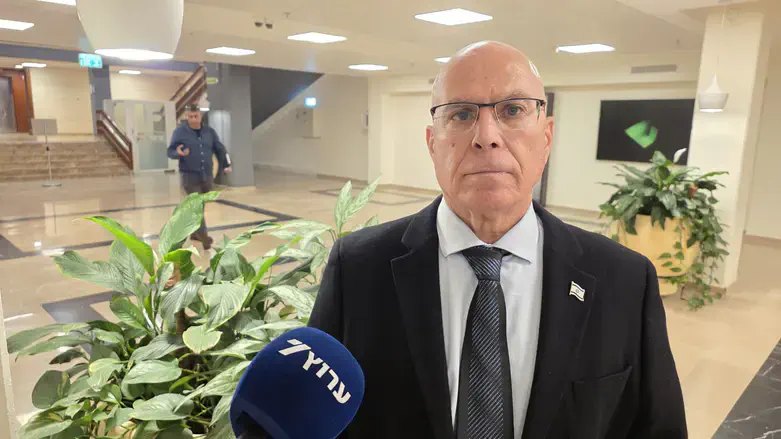
MK Tzvika Foghel, in an interview with Arutz Sheva, relives the difficult moments he faced when he received a call during a meeting of the Foreign Affairs and Defense Committee yesterday, informing him that a shooting attack had been carried out in Sydney, where his son, daughter-in-law, and two grandchildren were staying.
"During a very important discussion, the committee manager suddenly showed me a message on the screen - there was a shooting attack in Sydney, and there were casualties. At the same time, my phone, which was on silent, started vibrating. I realized something unusual was happening. I stopped the meeting, apologized to the members of Knesset, and told them I have a son, a daughter-in-law, and two grandchildren there."
After leaving the meeting, MK Foghel tried to contact his family. "My son's phone fell when he was running with the child to hide. I managed to reach his wife, and eventually, he answered. I understood that they were already together in the car on their way home. For me, this was a personal Hanukkah miracle."
"They heard singing after lighting the menorah, and suddenly - gunfire. My son immediately told his wife, 'Take Daisy and run.' He ran with Tom in a different direction. She hid under the car, and he hid behind a freezer. A police officer who was injured by gunfire fell right next to them," Foghel explains.
Later in the conversation, Foghel addressed the sense of antisemitism that existed in the area even before the attack. "Yes, there was a fire in a synagogue and near kindergartens, but they didn't feel it was an everyday occurrence. I think today he understands it much more."
The chairman of the committee also addressed the death penalty for terrorists law, stating that it is an integral part of Israel's defense framework: "We have Iron Dome, and we have the death penalty for terrorists. This isn't defense-it's offense. It's part of the protective wall we are building to deter the other side. This punishment is logical, moral, and Jewish. I hear the criticism and listen to everyone. We will correct what needs to be corrected, but none of us wants to live in a world where the murderer of Hadassah Fogel, or the Bibas family, lives next to us. This is a law that is both good, effective, and just."