

Iran has significantly escalated its efforts to arm terrorist proxies in Judea and Samaria, quietly smuggling advanced weaponry into the territory in recent months, according to Israeli intelligence centers and regional analysts quoted in a Washington Free Beacon report on Tuesday.
The goal, according to the sources, is to transform the area into a Gaza-style terrorist hub capable of replicating Hamas’s October 7 massacre.
Following the Trump-backed ceasefire between Israel and Hamas last month, Islamic Jihad shifted its operational focus to Judea and Samaria. While Islamic Jihad remains the most active Iranian proxy in cities such as Hebron, Shechem (Nablus), Jenin, and Jericho, it is joined by factions from the Al-Aqsa Martyrs’ Brigade, the Popular Front for the Liberation of Palestine, and Hamas’s local cells - 28 groups in total, according to the Foundation for Defense of Democracies (FDD).
These terror groups have acquired weaponry previously unseen in Judea and Samaria, including explosive drones, anti-tank missiles, rocket-propelled grenades, and advanced rockets. The Meir Amit Intelligence and Terrorism Information Center reported that Hamas declared that Judea and Samaria would “continue to be a leading arena of resistance” immediately after the October 10 ceasefire.
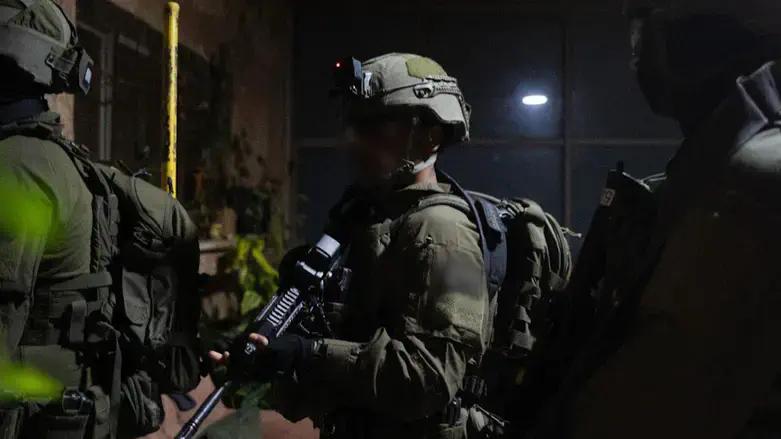
Recent IDF operations have intercepted Iranian arms shipments, including a drone carrying 10 guns from Jordan and an October delivery from Iran’s Quds Force containing 15 anti-tank rockets, 29 explosive charges, four armed drones, and assorted firearms.
Iran is now attempting to funnel weapons through Jordan and Lebanon. Israeli forces thwarted two Quds Force smuggling attempts from Lebanon in July, the Amit Center reported.
In February, the IDF disrupted a plot from a joint Hamas-Islamic Jihad-Al-Aqsa Martyrs’ Brigades command center in the Nur Shams refugee camp. Terrorists had planted explosives on buses targeting civilians in five locations across three cities. A timing error led to premature detonation, allowing Israeli forces to neutralize the remaining devices.
The David Institute for Security Policy confirmed the plot’s Iranian backing and described Judea and Samaria as Israel’s “soft underbelly” due to its proximity to major cities and Ben Gurion Airport.
Photographs from a Hebron weapons depot revealed missile production facilities, indicating that terror groups in Judea and Samaria are now capable of manufacturing advanced weapons independently, echoing Hamas’s methods in Gaza after the 2005 IDF withdrawal.