

IDF Chief of Staff LTG Eyal Zamir on Monday received the comprehensive findings of the Expert Committee appointed to examine the quality of the IDF's investigations into the events of October 7th, 2023. The committee, led by Major General (res.) Sami Turgeman and composed of multidisciplinary military experts, presented its conclusions to LTG Zamir and the General Staff Forum.
"Transparency is a necessary condition for maintaining the public’s trust in the IDF. It is also a fundamental requirement for our ability to improve," said LTG Zamir. "The committee’s findings are not the final word; they are part of an ongoing process of examination, learning, and implementation that the IDF will continue to pursue in the coming years."
The committee, established upon LTG Zamir’s appointment, began its work on March 22, 2025. It was tasked with assessing the investigative processes of the IDF in relation to the October 7th events. The scope included reviewing internal inquiries initiated on March 7, 2024, by former Chief of Staff LTG Herzi Halevi as part of the "Swords of Iron" War investigation.
Approaching its mission with humility and a deep sense of responsibility, the committee reviewed and evaluated 25 investigations conducted within the IDF. These inquiries were categorized by quality: some were deemed professional and comprehensive, others lacked clarity in identifying failures or needed changes, and a few were considered unsatisfactory.
The committee emphasized that it dealt exclusively with internal IDF investigations and did not examine interactions between the military and political leadership or with other security agencies. It issued a call for information to officers in both mandatory and reserve service and personally examined each inquiry submitted. Approximately 80 officials were interviewed.
Despite significant gaps, the committee found that all commanders involved acted with integrity and sincerity, genuinely intending to conduct truthful and thorough inquiries. Nonetheless, the panel found that several critical topics had yet to be adequately investigated. These include the handling of intelligence reports received over the years and the systemic and operational aspects of the "Jericho Wall" plan.
After a systemic and integrative review, the committee identified six primary causes of the failure:
1. Conceptual failure - a misalignment between the perception and the reality of the threat posed by Hamas in Gaza.
2. Intelligence failure - inadequate understanding of the threat and a failure to provide sufficient warning.
3. Lack of engagement with the "Jericho Wall" plan.
4. Flawed organizational and operational culture.
5. A persistent gap between threat definitions and the operational response.
6. Deficient decision-making and force deployment on the night of October 7th.
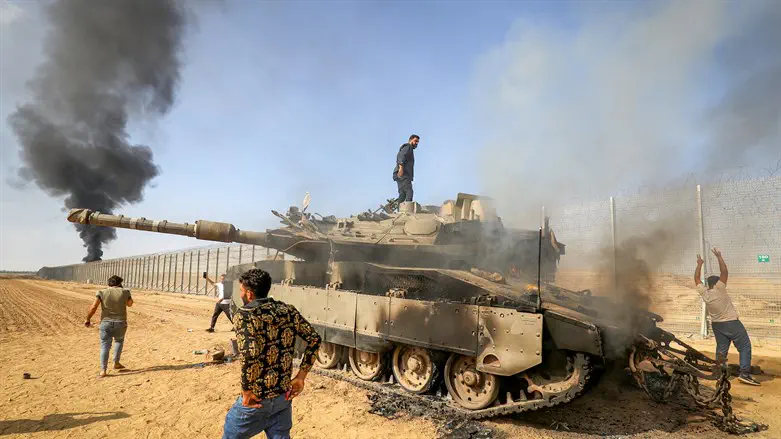
The committee underscored that the surprise attack did not result from a lack of intelligence. High-quality information had been accumulated by IDF units before the attack, which, if analyzed professionally, could have prompted an alert and significant operational response.
It was further noted that in 2023, senior military officials warned of internal processes undermining Israeli deterrence, yet no corresponding adjustments were made to the IDF’s readiness or deployment.
The findings pointed to widespread systemic and organizational failures across the IDF:
* The General Staff underestimated the enemy and failed to develop an adequate military response.
* The Operations Directorate neglected to prepare for a surprise war scenario and failed to lead knowledge-development processes or adapt force employment.
* The Intelligence Directorate did not identify Hamas’ strategic developments, failed to maintain ongoing research, and did not issue an early warning.
* The Southern Command failed to provide early warning or secure the area under its jurisdiction, particularly regarding the "Jericho Wall."
* The Gaza Division failed to recognize evolving threats, adjust force deployments, or raise alert levels despite having access to critical information.
* The Air Force lacked preparedness for low-altitude threats and failed to respond effectively during the attack.
* The Navy was similarly unprepared to defend strategic maritime sites.
Regarding the night preceding the attack, the committee noted the absence of a comprehensive intelligence assessment or any significant operational action. However, the committee commended IDF commanders who rushed to the frontlines without orders and fought bravely.
The committee also accepted the findings of the Combat Intelligence Collection Corps, praising the performance of female field observers who continued to report under direct threat. It acknowledged that these observers had identified signs of enemy activity well before the war.
Civilian security coordinators and rapid-response teams were also recognized for their heroism, which significantly influenced the outcomes in various communities. However, the committee criticized the erosion of the regional defense framework and emphasized the need for a new doctrine, particularly in light of findings related to the Nova music festival attack.
To implement necessary changes, the committee issued the following recommendations:
1. Establish a multidisciplinary team led by the Deputy Chief of Staff to develop a multi-year implementation plan.
2. Prioritize readiness for surprise war scenarios in operational and organizational planning.
3. Continue reforms within the Intelligence Directorate, with early warning as a top priority.
4. Review the regional defense doctrine to better align command responsibility and authority.
5. Enhance the professionalism of personnel in command and headquarters roles.
LTG Zamir ordered the findings to be presented across various IDF frameworks and within command training programs. "One of my first decisions as Chief of Staff was to appoint an independent committee of experts - a vital step toward restoring commanders’ trust in the military investigation process, restoring the public’s trust in the IDF and its commanders, and rebuilding and strengthening the foundations of military professionalism," he stated.
"We are investigating a tremendous failure - one that cost human lives, that touched countless families who lost what was most precious to them; a failure reflected in the hostages who returned and in those whose bodies are still held by the murderous terrorists in Gaza," Zamir said.
"Our responsibility is not to blur or conceal this failure, but to look it straight in the eye - and learn from it."
He also emphasized the IDF's recovery, highlighting its success across multiple fronts over the past two years. "The ability of commanders who failed on October 7th to rise from the shock, to fight, to lead their forces to extraordinary achievements, and to simultaneously change and grow stronger - is the ultimate proof of the IDF’s resilience."
"The corrections we will implement following this report will be integrated into every operational and combat activity, as well as into all working plans for the coming years - to ensure that the IDF continues to defend the people of Israel and fulfill its mission," he added.
"Today, we conclude the phase of the October 7th inquiries within the IDF. We have turned over every stone in order to understand the events and the reasons that led to this immense and painful failure. The purpose was to learn and to uncover the truth within the IDF - and from here, we move forward toward implementation, correction, and growth."
"The expert committee’s report presented today is a significant step toward achieving the comprehensive understanding that we, as a society and as an organization, require. However, to ensure that such failures never recur, a broader understanding is needed - one that encompasses the inter-organizational and inter-hierarchical interfaces that have not yet been examined. To that end, a broad and comprehensive systemic investigation is now necessary."
"From the pain, and from the battles we are still fighting today, we will build resilience and renewal for the day after. From the rupture, we will secure a safer future for the people of Israel. And out of responsibility, we will continue to be an army that defends the nation and ensures its existence."