

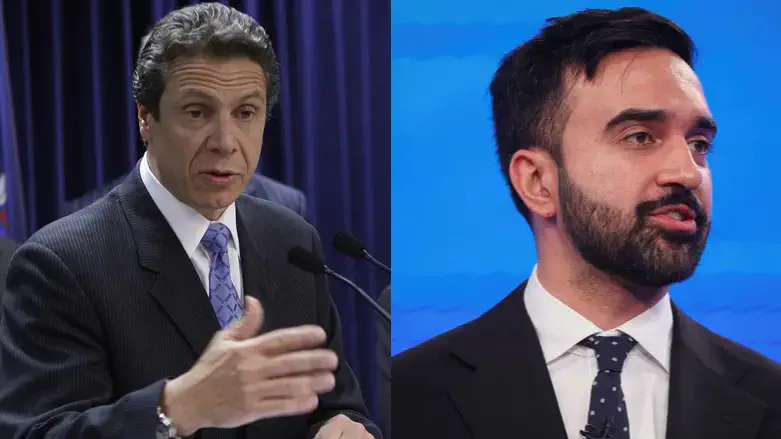
Former New York Governor Andrew Cuomo hit the campaign trail this week alongside Brooklyn Councilwoman Inna Vernikov, one of the city’s most prominent Republicans, as he seeks to build bipartisan support in his uphill bid against far-left Democratic nominee Zohran Mamdani in the New York City mayoral race.
Vernikov, a Ukrainian-born Jewish lawmaker representing South Brooklyn neighborhoods with large immigrant communities from the former Soviet Union, broke ranks with her party to endorse Cuomo over Republican contender Curtis Sliwa.
“Inna has been a fearless voice against antisemitism and for public safety, accountability, and common sense in city government,” Cuomo said at a campaign event. “We may come from different parties, but we share the same goal: protecting New York’s values and future.”
The endorsement marks one of Cuomo’s most visible efforts to court moderate Democrats and disillusioned Republicans who see Mamdani’s democratic socialist platform as a threat to public safety, economic stability, and the city’s Jewish community.
Vernikov’s South Brooklyn district, including Brighton Beach, Sheepshead Bay, and Manhattan Beach, voted overwhelmingly for Donald Trump in the last presidential election. Her support could give Cuomo a critical foothold in a conservative voter base that has long been reluctant to back Democrats.
Vernikov, an outspoken supporter of Israel, framed her decision to endorse Cuomo as a matter of conscience rather than politics.
“This race isn’t about party labels,” she said earlier this week. “It’s about whether New York will remain safe, sane, and supportive of our Jewish community - or fall into the hands of someone who despises everything we stand for.”
Cuomo recalled Vernikov’s words to supporters, saying she warned that “many in this community feel everything they once escaped would now be coming to New York if Mamdani is elected.”
Running as an independent after losing the Democratic primary to Mamdani, Cuomo has positioned himself as the only viable alternative to what he calls Mamdani’s “ideological extremism.”