

One of the most glaring failures during the October 7 Hamas invasion was the lack of an immediate aerial response as terrorists poured across the Gaza border into southern Israel.
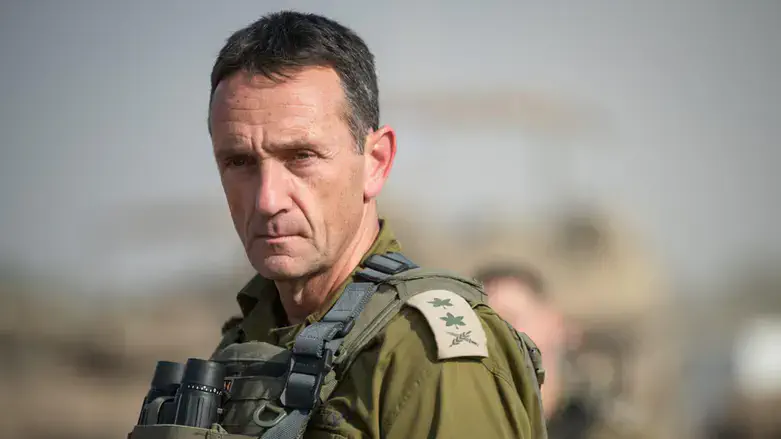
An investigative report aired Tuesday night on Channel 12 News revealed that at 7:40 a.m., one hour and 11 minutes after the attack began, then-IDF Chief of Staff Herzi Halevi ordered the Air Force to strike high-value "psychological impact targets" deep inside Gaza, such as tall buildings, broadcast stations, and incitement hubs, while Hamas terrorists were simultaneously rampaging through Israeli communities.
Due to a shortage of aircraft in the air at that moment, the directive was not carried out. The report noted that this indicates a serious intelligence and situational awareness gap within the IDF's senior ranks that morning.
Simultaneously, Prime Minister Benjamin Netanyahu ordered efforts to target top Hamas leaders, and Southern Command declared the launch of “Operation Sword of Damocles,” aimed at striking Hamas leadership assets and infrastructure.
However, the military directive “Parash Pleshet,” which was supposed to mobilize the Gaza Division into full emergency posture, was only partially implemented. Many Air Force strikes continued to focus on Hamas tunnel infrastructure, with the Air Force failing to make an independent decision to target the hundreds of terrorists infiltrating Israeli territory. As a result, the few aircraft available on the morning of the attack were not used to engage the ground threat effectively.
According to an IDF internal investigation published in February, Air Force Commander Maj. Gen. Tomer Bar did not participate in security consultations on the night of October 6, resulting in the Air Force being unprepared for a ground invasion scenario. As late as 3:30 a.m. on October 7, only one UAV was redirected from Judea and Samaria to Gaza, and just two drones were operational over the Strip in the hours leading up to the attack.
At 6:29 a.m., when the infiltration began, the Air Force was still operating under normal peacetime protocol. It was only at 7:10 a.m. that the Air Force commander declared a state of war, by which point over 1,000 Hamas Nukhba terrorists had already breached the border and were attacking Israeli communities.
By 11:00 a.m., the IDF had carried out 150 strikes: 50 by fighter jets, 50 by fighter helicopters, and 50 by UAVs. However, senior Air Force officials acknowledged after the probe: “Without intelligence and advance preparation, preventing the disaster was impossible. We could only limit the damage.”