

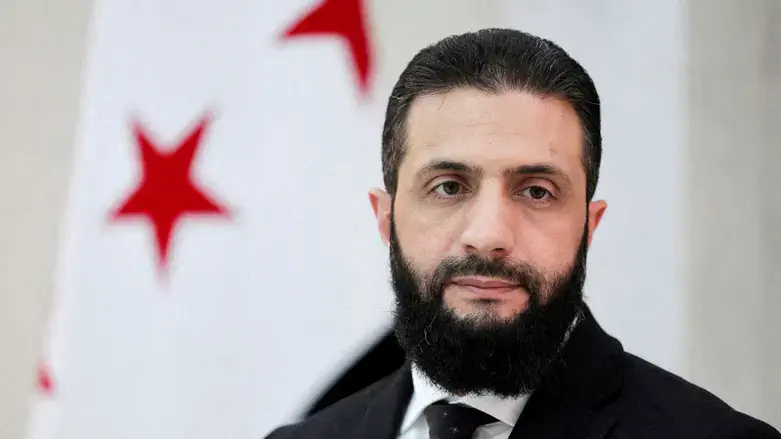
Syria's new Islamist authorities, who deposed long-time ruler Bashar Al-Assad, have announced that a transitional parliament will be selected on October 5, in line with a constitutional declaration announced earlier this year, AFP reported on Sunday.
The upcoming legislature is slated to serve a five-year term and will consist of 210 lawmakers. Of these, 140 will be designated by local committees under the commission's supervision, while the remaining 70 will be directly appointed by interim President Ahmed al-Sharaa.
The new government, which took power in a swift offensive last December, has already dissolved the former People's Assembly. While the selection process is scheduled for October 5 "in the electoral districts of Syria's provinces," the Syrian electoral commission has not confirmed whether all provinces will participate.
This uncertainty comes after a government announcement in late August that the selection would be delayed in the Druze-majority province of Sweida and in the Kurdish-held regions of Raqa and Hasakeh due to ongoing security and political concerns. The Sweida province experienced deadly clashes in July.
The new system for appointing the interim parliament has faced significant criticism from opposition and civil society groups. These groups have condemned the immense concentration of power in the president's hands and the inadequate representation of the country's diverse ethnic and religious minorities.
According to the constitutional declaration adopted in March, the transitional parliament will have a renewable 30-month mandate, serving until a permanent constitution is adopted and new elections can be held.
Sharaa has stated in the past that it would take between four and five years to organize presidential elections.
The interim president headed the Islamist rebel faction Hayat Tahrir al-Sham (HTS), which was once a part of Al-Nusra Front, Syria’s Al-Qaeda branch.
HTS later broke off from Al-Nusra Front and prioritized combatting Al-Qaeda as well as the Islamic State (ISIS), of which Sharaa was critical, describing its self-proclaimed caliphate in parts of Syria and Iraq as "illegitimate".
Shortly after Sharaa came to power, the US decided to remove the $10 million bounty on his head. Last month, the US officially revoked the sanctions on the Syrian government which were imposed during the Assad era.