

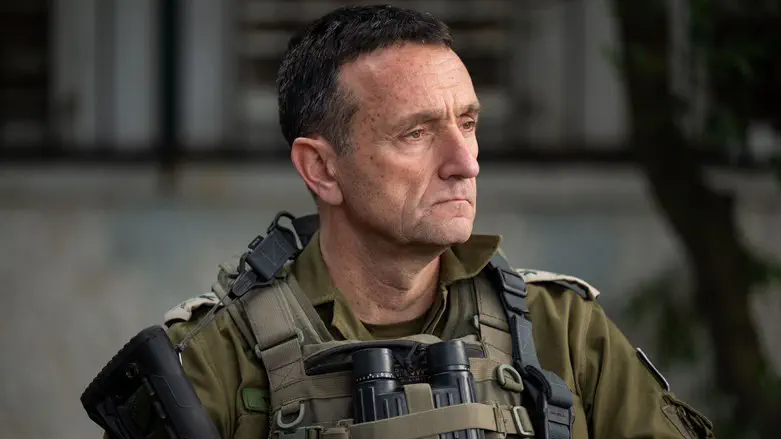
Former IDF Chief of Staff Herzi Halevi met with residents of Ein HaBesor, located in southern Israel near the border with the Gaza Strip, and acknowledged that the IDF failed to accurately assess the threat ahead of the October 7 massacre.
“October 7 was a massive and terrible failure. I was in command of the IDF on that day - it’s my responsibility. I will carry this burden and face it head-on. I’m here representing the pain and the responsibility. We didn’t underestimate Hamas, but we didn’t believe they were capable of initiating something like this. They succeeded in concealing their plans from us effectively,” Halevi said in recordings aired on Channel 13 News, alongside former Southern Command chief Yaron Finkelman.
Finkelman added that the IDF failed to grasp the full scope of the threat from Gaza. “The enemy surprised us - not only on October 7, but also with the capabilities they had developed. We failed to detect this both in terms of intelligence and strategic assessment,” he said.
When asked about the current security situation in the Gaza border region, Halevi responded: “I’m often asked whether it’s safe to live in this area, and I say to you - yes. Since that terrible day, we have been committed to learning and making corrections.”
In a separate recording aired on Kan 11 News, Halevi described the military collapse during the initial hours of the attack. “For five or six hours, the Gaza Division, which had done so much to defend this area, was collapsing. It’s very difficult for me to say this, but the defense fell apart in those first hours. We had prepared for six to eight infiltration points, and we were confronted with 40 - along with some 6,000 terrorists. We had partial knowledge, but the sheer number of vehicles entering and engaging with reinforcements made it extremely difficult.”
“Even that night, tragically, no one in our discussions said that a war was beginning. More than that - no one even issued a warning. There were signs, and in hindsight, we could have done better, more accurately. But we didn’t have the opportunity to discuss whether this was a war or merely an exercise, as was the case before the Yom Kippur War,” Halevi concluded.