

Nuclear weapons experts have stated that for the first time in 15 years, Iran has "no identifiable route" to produce weapons-grade uranium in the wake of Israel and America's strikes on the Iranian nuclear program, the New York Post reported.
The report was written by a team led by nuclear weapons expert David Albright for the Institute for Science and International Security, which Albright founded, using data provided by the International Atomic Energy Agency (IAEA).
The reports states: "With the massive destruction of its gas centrifuge program and installed centrifuge cascades, for the first time in over 15 years, Iran has no identifiable route to produce weapon-grade uranium (WGU) in its centrifuge plants. In addition, the attacks caused immense destruction to Iran’s ability to make the nuclear weapon itself."
The report cautioned that it cannot comment on the potential that some centrifuges may have survived the American and Israeli airstrikes, as there is no available data on surviving centrifuges.
The US bombed Iran's nuclear facilities during Operation Midnight Hammer on the evening of June 21, 2025, a few days before the end of the 12-Day War between Israel and Iran.
US President Donald Trump has previously stated that Iran's key nuclear facilities were "obliterated" following the air strikes.
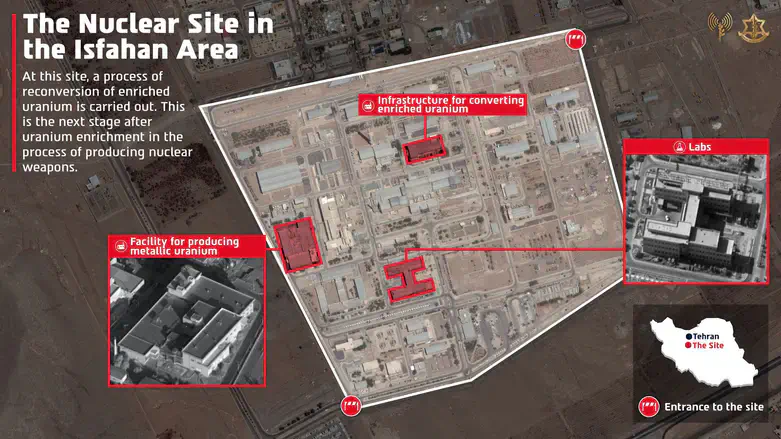
In July, more than a month after the airstrikes, Albright revealed that satellite imagery reviewed by the Institute for Science and International Security uncovered new activity at Iran’s Isfahan nuclear complex.
In a detailed post on X, Albright stated that “we at the Institute found new activity at one of the Isfahan tunnel entrances that occurred during the last few days.” He noted that vehicles were observed at the northernmost tunnel entrance, and that “access to the tunnel portal, which was previously blocked by backfilled dirt, has been gained within the last week.”
Albright added that while the central tunnel entrance also showed signs of movement in mid-July, including the presence of heavy machinery, “no significant progress appears to have been made towards establishing tunnel portal access as of the end of July.” Meanwhile, roadblocks leading to the southern tunnel entrance remain in place, and “no activity is visible there,” he wrote.
At the main Isfahan site, satellite images showed minimal activity. “Some roads have been cleared of debris but there is minimal vehicle presence,” Albright noted, adding that several routes around the damaged aboveground structures remain obstructed, with roadblocks still installed.