

In a marked shift from previous policy, the United Kingdom has formally stated that it does not consider Israel’s military actions in Gaza to meet the legal definition of genocide, the Times reported on Monday.
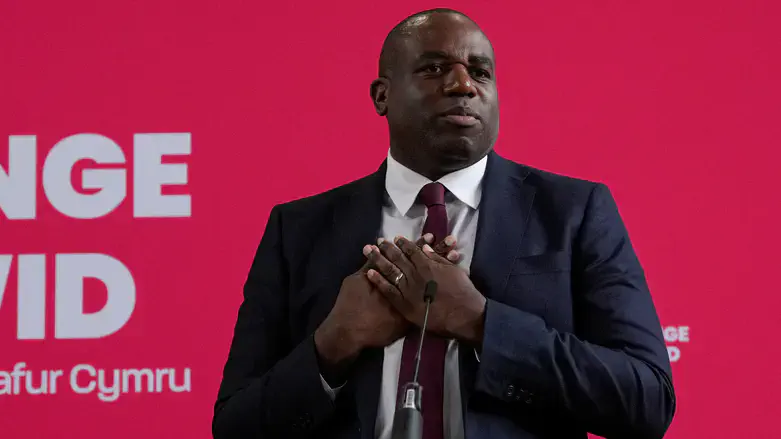
The declaration came in a letter from David Lammy, written during his final days as Foreign Secretary before assuming the roles of Justice Secretary and Deputy Prime Minister in Sir Keir Starmer’s cabinet reshuffle, announced this past Friday.
Lammy’s letter, addressed to Sarah Champion, chair of the international development committee, followed her demand for clarity on the UK’s continued supply of components for F-35 fighter jets used by Israel.
The Foreign Office, Lammy wrote, had conducted assessments and concluded that Israel’s actions did not meet the threshold for genocide under the Genocide Convention, which requires “intent to destroy, in whole or in part, a national, ethnic, racial or religious group.”
He added, “The government has not concluded that Israel is acting with that intent.”
This marks the first time the UK government has explicitly stated its position on the matter. Previously, officials maintained that genocide determinations were the purview of competent courts, not national governments.
In May, Middle East Minister Hamish Falconer reiterated this stance, saying: “It is the UK government’s long-standing position that any formal determination as to whether genocide has occurred is a matter for a competent court, not for governments or non-judicial bodies.”
Despite the conclusion, Lammy acknowledged the severity of the situation in Gaza, describing Israel’s actions as “utterly appalling” due to the high number of civilian casualties and widespread destruction, according to the Times. He urged Israel to “do much more to prevent and alleviate the suffering that this conflict is causing.”
The UK suspended 30 arms export licenses to Israel last September over concerns that British-made weaponry could be used in violations of international law. However, it exempted components for the US-produced F-35 fighter jets, citing their role in a broader NATO defence programme essential to global peacekeeping.