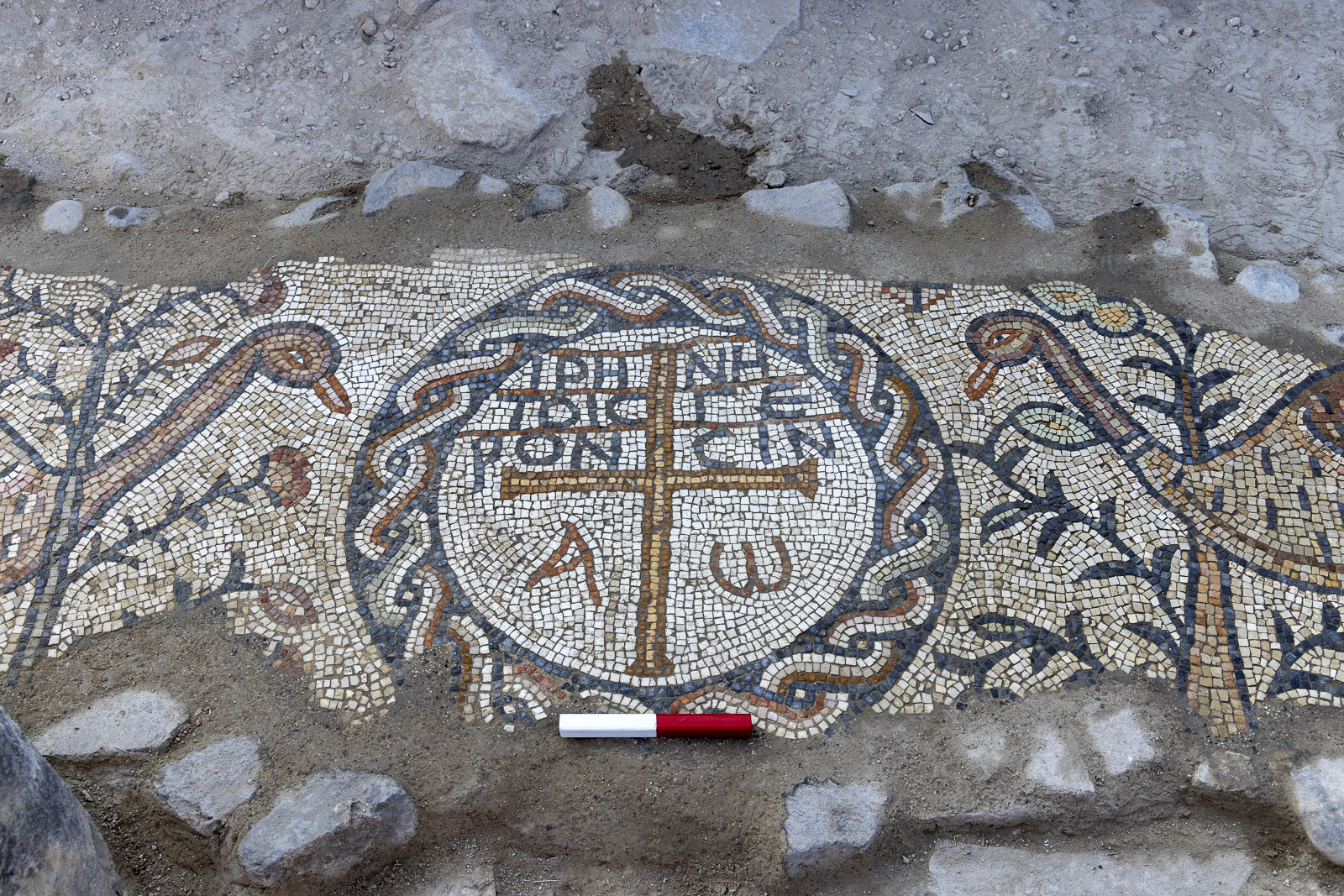
Haifa, Israel (August 18, 2025) - During archaeological excavations in Hippos (Sussita) National Park near the Sea of Galilee, University of Haifa researchers uncovered a Greek mosaic inscription bearing the unusual blessing, “Peace be with the elders.”
The inscription likely points to the existence of the oldest known nursing home discovered in an archaeological excavation to date.
Dated to the late fourth or, at the latest, early fifth century CE, the inscription was found within an ornate medallion adorned with colorful motifs, adjacent to one of the most impressive mosaics uncovered at the site. The research findings were recently published in Zeitschrift für Papyrologie und Epigraphik, a leading scientific journal in the field.
“This is living proof that care and concern for the elderly are not just a modern idea, but were part of social institutions and concepts as far back as about 1,600 years ago,” says Dr. Michael Eisenberg of the Zinman Institute of Archaeology and the Department of Archaeology at University of Haifa, and co-director of the excavation project.
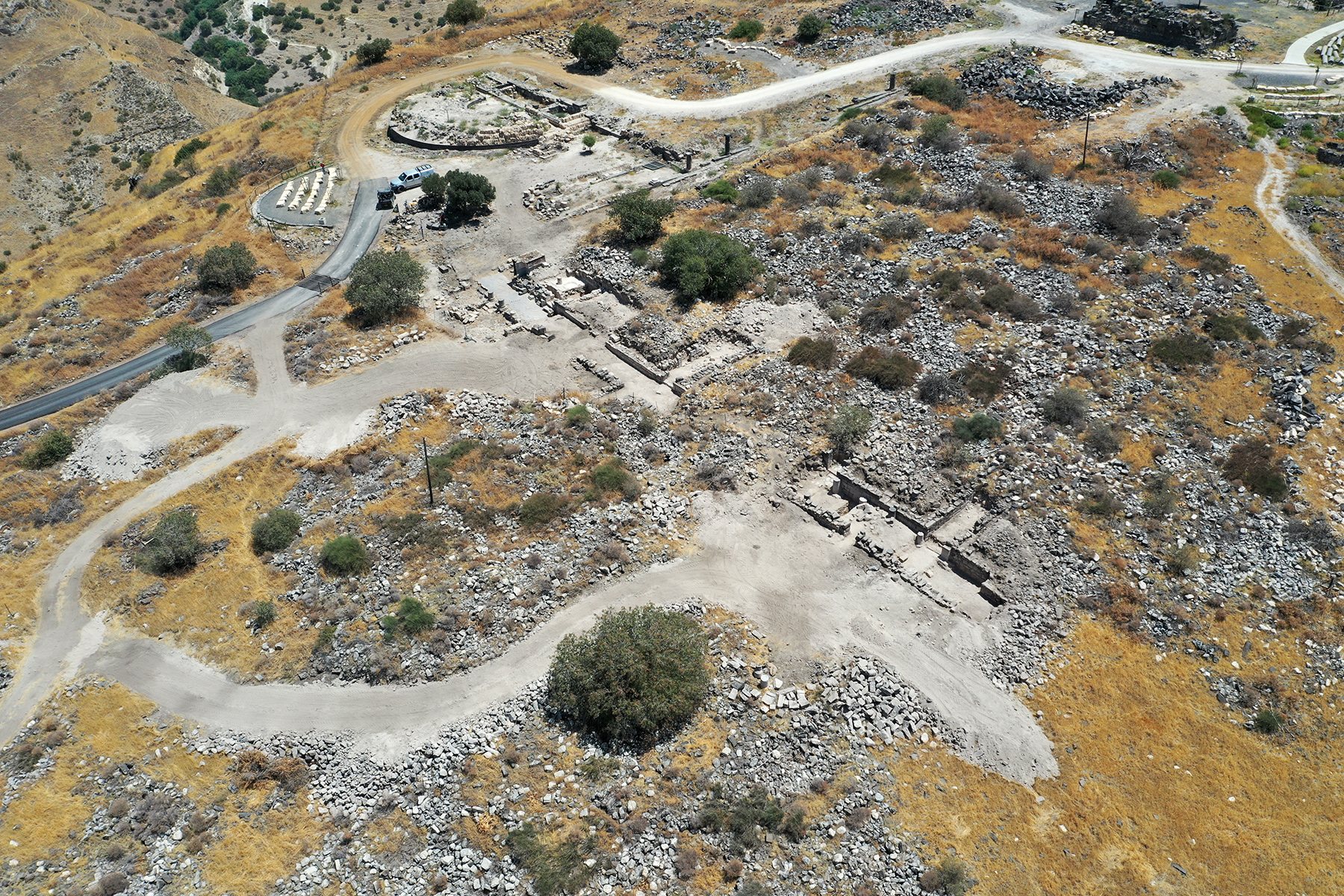
Hippos was the central Christian city in the Sea of Galilee region during the Byzantine period, serving as a bishop’s seat and hosting at least seven churches. Located on a hill overlooking the Sea of Galilee, the city has been the focus of systematic excavations, including extensive conservation efforts, since 2000. During the Byzantine period, Hippos functioned as a religious, social, and economic hub, with its main streets — the decumanus maximus (east-west) and a network of cardines (north-south) — serving as primary thoroughfares.
The mosaic was uncovered near the intersection of two major streets, approximately 100 meters from the central plaza, within one of the surrounding residential blocks. In the current study, Dr. Eisenberg, Dr. Arleta Kowalewska of the Zinman Institute of Archaeology, and epigrapher Professor Gregor Staab of the University of Cologne examined whether the inscription indicates that the building served as a dedicated institute for the elderly, providing the earliest archaeological evidence for a nursing home dated no later than the early fifth century CE.
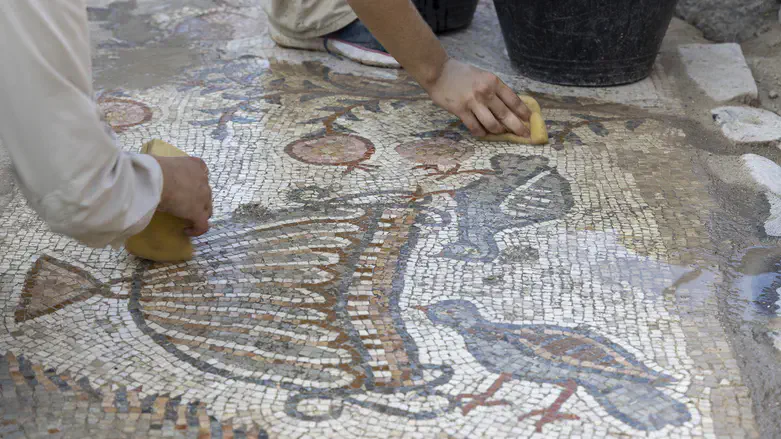
During the 2023-2024 excavation seasons, the mosaic section was fully uncovered and underwent initial conservation by the expedition’s conservator, Yana Qedem. The research team analyzed the Greek inscription linguistically, stylistically, and contextually, comparing it to historical sources from the Byzantine period that mention institutions for the elderly. They also examined iconographic depictions around the inscription, including Egyptian geese, cypress trees, fruits, and vessels. According to the researchers, the mosaic was installed near the building’s entrance, positioned centrally and visibly to those entering.
The study’s results indicate that the mosaic from Hippos is likely the first archaeological evidence of an institution designed specifically to serve the elderly during the Byzantine period. While such institutions are known from fifth- and sixth-century written sources, this is the first time physical evidence has been found directly linking to this type of activity.
The inscription’s direct address to a specific age group — “Peace be with the elders” — combined with other features of the building and its urban context, suggests an organized social infrastructure designed to provide care and dignity to the Christian elderly.
“This was a communal and spiritual institution integrated into the fabric of city life and reflecting the social values of the period. The inscription addresses a specific public directly, which is a rare glimpse into the daily lives of older people in antiquity. It may provide one of the earliest material testimonies in the Holy Land, showing how the Christian community began assuming responsibilities for care that had previously been handled by family networks alone. This development likely reflects new Christian ways of life outside traditional family structures, such as monasticism,” the researchers conclude.
The mosaic from Hippos provides unique insight into social and religious life during the Byzantine period, particularly regarding the care of the elderly. Whereas most evidence of elderly care in antiquity comes from written sources, this mosaic offers clear, dated, and tangible proof of an institution serving seniors within the community. The finding sheds new light on the role of the elderly in Byzantine Christian society and highlights that this society established not only churches and religious buildings, but also institutions with daily social functions.