

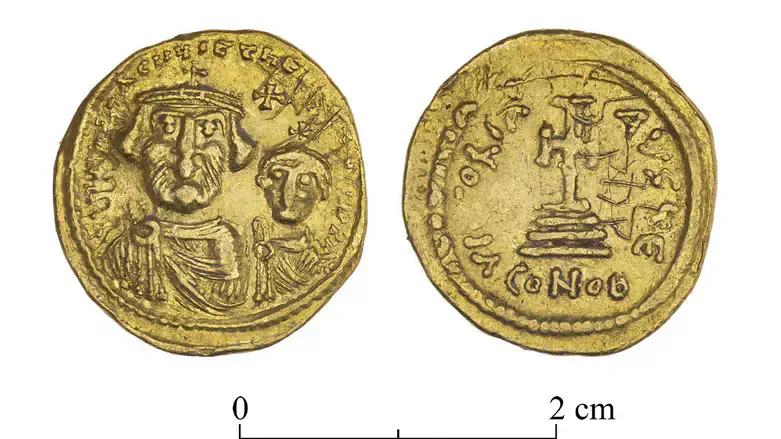
Recently, rare finds from the Byzantine period were uncovered at the Hyrcania archaeological site in the northern Judean Desert, including two gold coins and a delicate gold ring. These discoveries attest to Christian activity in the region during the Byzantine era. The finds were uncovered as part of excavation, research, and conservation works conducted at the site, in cooperation with academic teams from the Hebrew University of Jerusalem, and led by the Archaeology Unit at the Civil Administration. The Unit is working to preserve and protect the site after it was damaged in recent years by antiquities looting, intending to prepare it for controlled public access.
Khirbet Hyrcania is a multi-layered archaeological site in the Judean Desert, founded in the late Hellenistic period and used over the centuries as a fortress, and later as an active site during the Roman and Herodian periods. During the Byzantine period, with the development of Judean Desert monasticism, a Christian monastery was established at the site, attributed to the activity of Saint Sabbas, one of the founders of desert monasticism, which operated for hundreds of years. The finds uncovered at the site include two gold solidus coins bearing the image of the Byzantine Emperor Heraclius, alongside a delicate gold ring. These discoveries reinforce the understanding that Hyrcania was part of the monastic and religious landscape active in the Judean Desert during the Byzantine period.
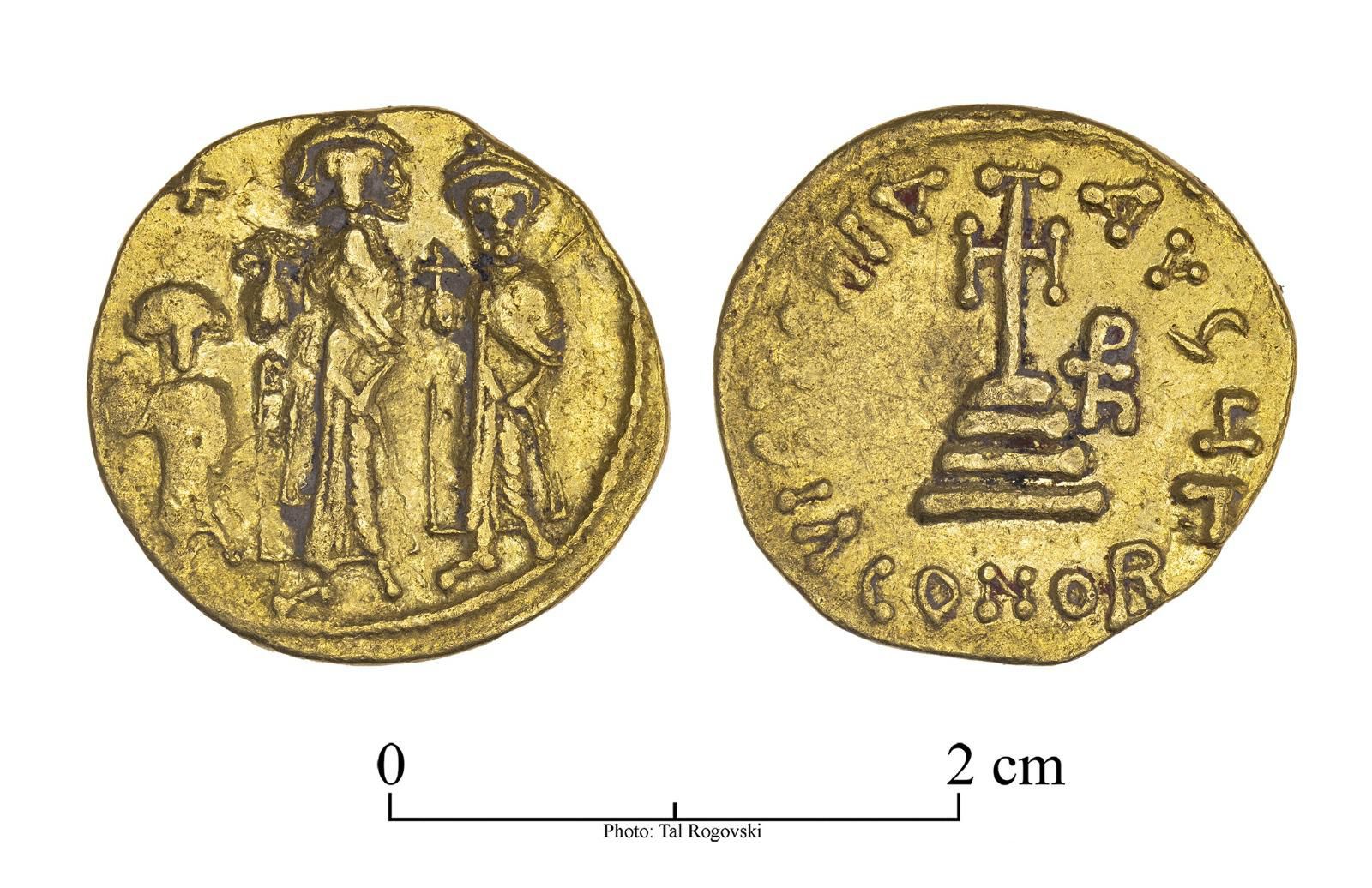
The exposure of the Byzantine finds at Khirbet Hyrcania is part of an ongoing effort led by the Archaeology Unit at the Civil Administration to preserve, research, and protect historical heritage sites. The activity is carried out in cooperation with academic institutions and includes documentation, excavation, and conservation works, alongside proactive measures to safeguard the sites. These efforts are intended to enable the study of the past and its presentation to the general public, and to preserve significant chapters of the Christian and Byzantine history of the region, as part of the shared heritage of the area for researchers, visitors, and audiences from Israel and around the world.
Binyamin Har-Even, Head of the Archaeology Unit at the Civil Administration: “The finds uncovered at Khirbet Hyrcania reflect an important chapter from the Byzantine period and the early Christian tradition in the region. As an Israeli body operating in the area and entrusted with safeguarding its historical heritage, the Archaeology Unit at the Civil Administration sees great importance in preserving and researching sites from all periods and communities that have operated here over the generations. Our work is intended to protect the past, enable its study, and make it accessible to everyone".