

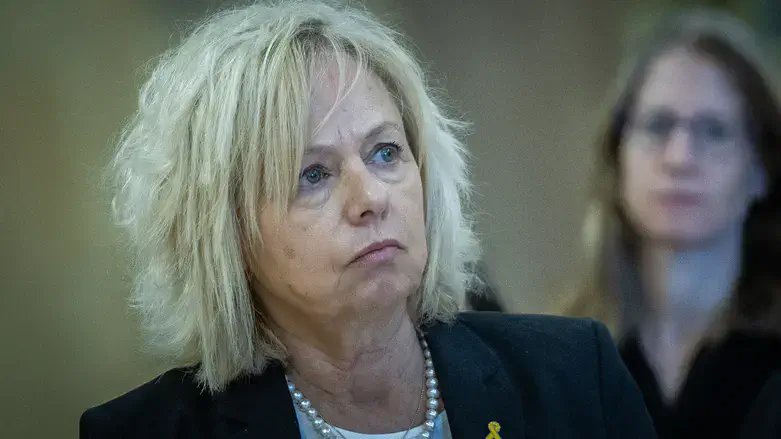
The special ministerial committee led by Minister Amichai Chikli convened again on Monday, this time without Attorney General Gali Baharav-Miara, who declined to appear at the scheduled hearing.
During the session, Minister Chikli presented a detailed document outlining dozens of allegations against Baharav-Miara. The document, based on hundreds of pages prepared by Justice Minister Yariv Levin, is reportedly intended to support calls for her dismissal.
Earlier in the day, Baharav-Miara issued a strongly worded statement explaining her refusal to attend. She condemned the hearing as a threat to the independence of the Attorney General’s office and the rule of law.
“The government’s move opens the door to dismissing the Attorney General—or any future legal adviser—on political or corrupt grounds. This includes cases where the adviser blocks illegal actions, orders investigations or indictments of coalition members, or refuses to halt criminal proceedings against sitting ministers.”
She described the hearing as “a sham with a predetermined outcome,” warning that it poses a serious threat to Israeli democracy and the rule of law.
Communications Minister Shlomo Karhi fired back, calling her refusal to appear “disgraceful” and accusing her of clinging to bureaucratic power at the expense of democratic governance.
“This is a continuation of the arrogant and forceful approach she leads,” Karhi said. “Ending her term is not only legal—it is necessary for democracy.” He urged the committee to treat her absence as de facto acceptance of the accusations and to recommend her immediate dismissal, a move he said should be brought before the government as soon as Tuesday.
Despite Baharav-Miara’s objections, the hearing was expected to proceed Monday afternoon after the Supreme Court declined to intervene. Justice Noam Sohlberg ruled that the hearing did not constitute an “irreversible step” and therefore did not warrant judicial intervention at this stage.
In a response submitted to the court on Sunday, the government argued that it had gone beyond legal obligations by offering Baharav-Miara the opportunity to respond, despite her refusal to engage with the process or attend relevant meetings.
Baharav-Miara, however, has maintained that the entire dismissal process is unlawful and politically motivated. She compared the situation to the infamous Bar-On Hebron affair, in which, according to publications at the time, Prime Minister Netanyahu and then-Minister of the Interior Aryeh Deri pushed the appointment of Roni Bar-On as Attorney General despite his lack of qualifications for the job. Netanyahu allegedly believed that Bar-On would help support a plea deal for Deri, who was at the time facing corruption charges. Deri, in turn, had allegedly pledged to support Netanyahu's deal with the PA concerning Hebron.
The Attorney General concluded by warning that the lack of an independent, professional committee overseeing the process reflects an attempt at “complete political control.”