

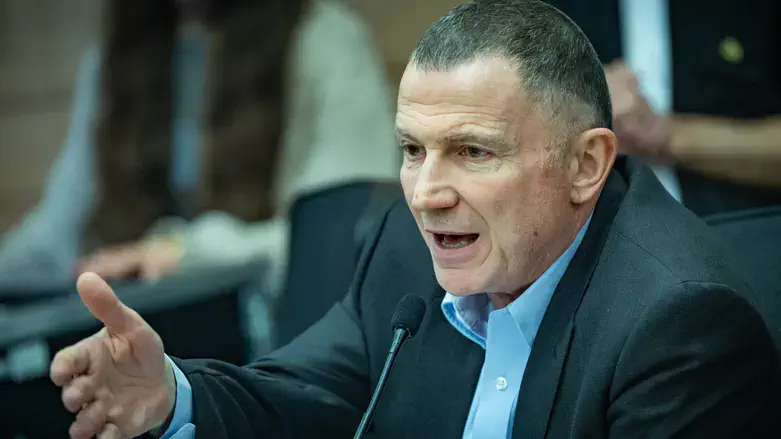
The ongoing controversy over the military draft law continues to stir internal conflict within the Likud party. On Wednesday, a senior Likud official accused MK Yuli Edelstein, chairman of the Knesset Foreign Affairs and Defense Committee, of pushing the country toward elections due to "political obstinacy."
The official stated, "Edelstein's political stubbornness is dragging us all into elections during a decisive operation in Gaza, with hostages still held by Hamas, and amid the looming nuclear threat from Iran. This is sheer madness and utter irresponsibility—all driven by narrow political considerations and personal vendettas."
In response, Edelstein's spokesperson, Maayan Salmon, sharply retorted, "If drafting haredim in a reality where our brothers are worn out in reserves, their families are collapsing, and couples are divorcing because they can't handle the burden of reserve duty is 'personal vengeance'—then I support vengeance."
Likud MK Eli Dallal expressed support for Edelstein's stance, stating, "Edelstein represents the Likud's position and the sane voice within it. There is a need for equal burden-sharing, and there is a need for drafting, and to do so with understanding."
These developments follow directives from Lithuanian haredi rabbis, leaders of the Degel HaTorah party, who instructed their representatives to pursue the dissolution of the Knesset due to the lack of progress on the draft law. Rabbis Moshe Hillel Hirsch and Dov Landau, heads of the Slabodka Yeshiva, made this decision after being briefed on the details of a meeting between MKs and Edelstein, which reportedly yielded no progress on the issue.
In light of the haredi announcement, the Yesh Atid party declared that it would bring a bill to dissolve the Knesset to a vote in the plenary next week. The Labor and Yisrael Beyteinu factions are expected to submit similar proposals.
This could lead to early elections for the 26th Knesset, potentially scheduled for late October 2025 or February-March 2026.
The Shas party has yet to make an official decision. Party leader Aryeh Deri holds significant political influence that could determine the coalition's fate, as Shas has 11 members compared to United Torah Judaism's seven.