
Prof. Uzi Rabi from the Dayan Center for Middle East and African Studies at Tel Aviv University, spoke in an interview with 103fm about Israel's large neighbor to the south.
What is the significance of the Egyptian military's buildup on our southern border? What can be done about it?
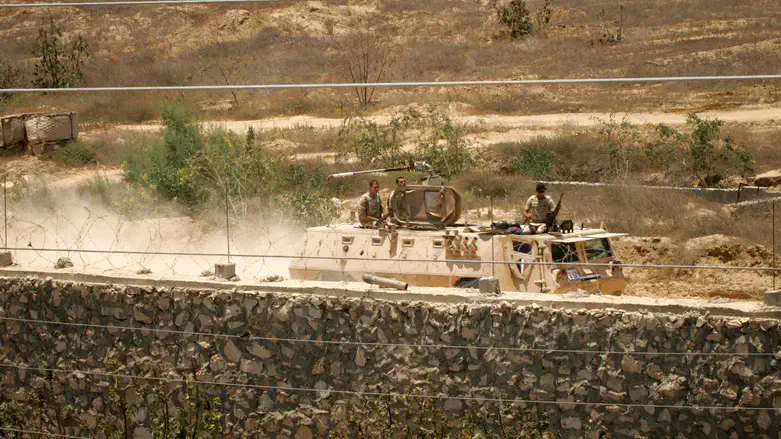
"The expansion of infrastructure in Sinai, airports, bunkers, communications depots, and a tunnel are well-known things, and they cannot be argued about. Another thing that is not in dispute, especially after October 7: In the end, when you are not the strongest in the region, you can start to fold," Rabi said, adding: "Egypt has an unusual buildup in the maritime domain."
He said, "There are Egyptian claims about national security and the events in Gaza. For instance, Egypt received permission to send forces into Sinai to fight ISIS forces. Israel has a large and extensive cooperation system with Egypt. But the problem is more complicated - when you look at an Arab country, we look from the country outward. We are obliged to take into account what is happening inside Egypt."
Are you afraid that Egypt will attack us?
"I don't have the luxury of not being afraid."
He believes that at this time Abdel Fattah al-Sisi has no intention of going to war with Israel, and yet he suggests that Israel be on its guard: "There is a backlog of things here: tensions around Hamas and the Philadelphi corridor and the Trump plan that hit Egypt like a cold shower. I look at what is happening inside Egypt. It is a huge country with 110 million people, and I cannot ignore the 'October spirit' that is rising there."
According to him, it is possible that these signals were intended to calm public opinion in Egypt: "In fact, there is a kind of muscle-flexing here that is intended to demonstrate something internally. A few weeks ago, they talked about al-Sisi on the networks saying that he is not Egyptian, that he was born in Morocco, that his mother is Jewish, fake news like that. He needs to generate muscle internally and show that he is in Arab solidarity and that Palestinians will not be displaced from Gaza. 'For us, this is a red line,' says al-Sisi."
Indeed, Egypt is a country with many problems: "I would show how many troubles Egypt has - from Libya and Ethiopia on the sea issue." However, the Egyptian public will not accept Egyptian cooperation with the Trump plan even in exchange for generous financial aid: "It is a very poor country, but if he ultimately does this, he will be accused by his own people of selling the Palestinian problem for money."
"The logic won't work like that, because it's a different political culture, but I'm not against this. Egypt is a country that can't walk on its own. It was born in overdraft, and if you compare the fact that Trump didn't touch aid to Egypt, he understands that economic leverage is needed here and can work," the expert added.
Rabi concluded: "'Blessed is the man who always fears' in the Middle East. On the other hand, let's strengthen Egypt economically."