

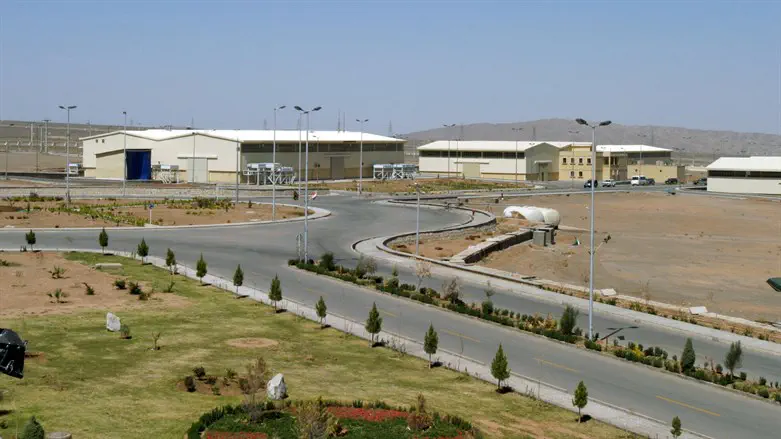
New satellite images reveal how Iran covered up the extent of the damage caused to the aerial defense system at the Natanz nuclear complex south of Tehran by Israel's retaliatory strike last week.
The Economist, citing imagery analyst Chris Biggers, reported that Israel appeared to have directly struck a 30n6e2 “Tombstone” radar, designed to track incoming air and missile threats, allowing interceptor missiles to take them out.
The rest of the aerial defense battery had been moved away, presumably in case Israel were to strike again.
Images shared by Biggers with The Economist show that by the day after the attack, Iran had swapped out the Tombstone radar for a different 96l6e “Cheeseboard” radar, placing it on the same spot. It also kept the launcher canisters, which fire interceptors, in an upright position, as though ready to fire.
Biggers summed up his findings: “It’s a case of denial and deception, to suggest the site is still operational.” The report notes that the site is almost certainly not operational, being that the two radars are not interchangeable and the aerial defense system will not work with a damaged Tombstone.
Earlier this week, new satellite images were released showing the damage caused to the Iranian military base in Isfahan by the alleged Israeli retaliatory strike.
The satellite images show what the Isfahan base looked like before and after the alleged Israeli strike.