Sweeter than honey
The Torah forbids honey in ketoret (incense). Why would a sweet, natural food for which the Land of Israel is praised, be forbidden? .
This week, we learn about a G-dly covenant. We know of other covenants, but surprisingly this one is about SALT! Why is salt so important?
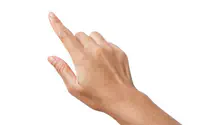
The finger has a very important place in Judaism in general, and in this parsha, in particular.
What is the idea behind bringing offerings to the Temple? Will that resume?
The effect of salt on food differs inherently from that of yeast, sugar or honey.

Israel’s redemption is a combination of G-d’s decision and our actions - in the Exodus, the Mishkan, redemption from Babylon and today.

Think about Pesach. Live Pesach. Don't let the preparations confound you.

The Tanya compacts four millennia of Jewish wisdom to answer the great personal and existential questions of life.
This Passover, gather your family and tell this story. How, in each generation, Jews are persecuted, saved, and are stronger in our faith.
Torah from Israel's first Chief Rabbi, the iconic leader of Religious Zionism. "In service to G-d, we can be both messengers and servants."
This coming Shabbat's parashah spells out the details of the offerings once brought to the sanctuary, but today read each morning..

People conventionally understand the seder to be about getting the children to ask questions. But it goes deeper than that.

Birkat ha-ilanot symbolizes the abundance that Hashem gives us beyond the basic necessities. The balanit should be careful not to overstep.

It is not just about one’s regular intelligence or IQ, but one’s emotional intelligence or EQ.

Let us hope we remember those we lost to the coronavirus and that our main goal is not health, but that health enables us to strive for it.

'What is a good kop?' Rabbi Shlomo Katz tells the story of Reb Pesach of Kobrin, grandson of one of the founders of Slonim.
Genesis began with an act of Divine creation. Exodus ends with an act of human creation!. G-d and we are partners!
A tabernacle can be built by deeds, but the most important tabernacle is built in the heart.
The “Glory of G-d ” is usually seen as being synonymous with the concept of the Shechina - Presence of G-d . Yet that cannot be the case.

The Chief Rabbi’s D’var Torah for Parshat HaChodesh.
Why does sefer Shmot end with 3 extra psukim on the Cloud guiding Am Yisrael, just after telling how the schina came down to the Tabernacle?
After a year of living under the shadow of COVID, G-d is calling us to return to our shuls with joy and thanksgiving.
Rabbi Yuval Cherlow, head of Center for Jewish Ethics at Tzohar, applies law banning Cohanim who shed blood to unvaccinated Cohanim.
Pesach, the Festival celebrating our freedom, calibrates the Holidays. And Ba'al ha-Turim's calculations find a tikkun in Eretz Yisrael.

In a video on the Torah portions of Vayakhel and Pekudei, Rabbi Shmuel Eliyahu speaks about the spark of Moshiach in each and every Jew.
As we are now building the future redemption of Am Yisrael, all who can participate are invited. But eventually that time will be over.
'May our eyes see Your return to Zion'- may G-d open our eyes to be conscious of and see the stages of the return to Zion and Jerusalem.
The Parsha in Chesed – Parshat Vayakhel.

Rabbi Avishai Kulin explains why Jewish law forbids making vaccine appointments in order to cancel them and waste doses.

Tel Aviv, which awards the prize, expresses in its name and history the Jewish renewal in our ancient Land.
The Tanya compacts four millennia of Jewish wisdom to answer the great personal and existential questions of life.
Watch as Rav Shlomo Katz shares this inspiring story how on Simchas Torah, the great Chortkov Rebbe held the Torah as if it was weightless!
Torah from Israel's first Chief Rabbi and iconic leader of Religious Zionists on why Moses did not accept G-d's offer after the Golden Calf.
We all have thoughts about giving to and getting from others. This video teaches what Rabbi Eliyahu, the Gaon of Vilna, taught about it.
This time there is no crowd, this time it's only G-d and you. We've added a thought on Pesach cleaning which is only your family and you.
Hashem made the first tablets, and Moshe the second. Why do the Sages consider the second tablets more esteemed than the first?
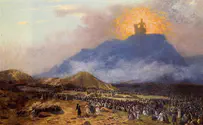
When one misses something, one comes to appreciate it all the more.
Surprisingly the Gemara praises one of the greatest sins perpetrated by the People of Israel, the sin of the golden calf.
Parshat Ki Tisa: Why is the giving of the second Tablets - the ones which stayed for generations - so undramatically described?
Reb Mottele was sitting on his porch singing 'Eliyahu Hanavi' and the way his chassid heard it, it was as if Moshiach had already come.
This Shabbat is the confluence of three components of our calendar: the aftermath of Purim, Parashat Ki Tissa, and Shabbat Parah.
A baseball player teaches us what it means to be a leader.

There is an apocryphal quote attributed to several politicians: “Of course I follow the party. After all, I am their leader.”
The Tanya compacts four millennia of Jewish wisdom to answer the great personal and existential questions of life.
Why is the US administration in concert with major Christian countries of Western Europe to continue the ways of the bad old Obama days?
How does Judaism define the moment of death?
The great Hasidic master of Kotzk continually maintained that truth is always hidden from public view.
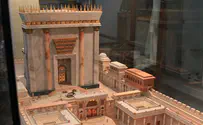
What does Rashi really say about the future Holy Temple?
This reminder is not about cleaning your closets but about preparing your soul.
Who stands behind the masks we wear?
The story of when the Bobover Rebbe found a torn page from the Talmud in a general's office during World War II.
The Megillah is replete with symbols of disguise and hiding and it is not by chance that the Torah reading talks of the priest's garments..
Observing the mitzvahs of Purim in a limited family only,was an opportunity to teach about joy without slipping into low level frivolity.
A thought provoking sequel to the Purim holiday.
This year I heard Megilat Esther outside wearing a coat in the cold, under a Jerusalem street light.
You don’t have to change the world to change the world, but we must always ask ourselves, what does Hashem want of me in this place, now?
We can’t change who we are, so even if we change what we do, it won’t stop antisemitism. So how do we respond to racism?
Today, Purim, many wear costumes and tomorrow, Shabbat. we read of the High Priest's garments. But what is the mmost important Purim deed?
A story for Purim about Israel's first Chief Rabbi, the Torah luminary who was the iconic leader of Religious Zionism.
This week in 'The Parsha in Chesed' series: the festival of Purim.