
Parashat Vayishlach teaches us something very important about how to deal with difficult situations, both in our personal lives and in public affairs.
Yaakov Avinu is returning to Eretz Yisrael when he hears that Esav is coming towards him with four hundred men. The Torah tells us: “Yaakov was greatly afraid and distressed."
Hashem had promised Yaakov that He would protect him. Yet Yaakov was afraid. The Gemara in Berachot explains that he feared that perhaps a sin might cause him to lose the protection he had been promised.
Yaakov did not simply wait and hope for the best. He divided his camp, sent gifts to Esav and prayed to Hashem. Rashi tells us that he prepared himself in three ways: a gift, prayer and war.
This is a very clear lesson. Yaakov wanted peace, but he also knew that he had to protect his family. He made every effort to prevent a fight, while preparing for the possibility that one might take place.
The Ohr HaChaim HaKadosh explains the difficulty Yaakov faced. If he did not prepare for war, he could be putting his family in danger. But if he openly prepared for battle, Esav might see this as a reason to attack. Yaakov had to find a way to seek peace without leaving his family unprotected.
Rashi also brings the words of the Midrash that Yaakov feared not only that he might be killed, but also that he might have to kill others. This teaches us that even when there is a need to defend ourselves, we must never take the taking of human life lightly.
The Ramban brings the example of Rabbi Yannai, who would study this part of the Torah before going to deal with the Roman authorities. The Ramban explains that Yaakov's conduct was a lesson for future generations. He concludes that future generations are to learn from Yaakov and follow his example.
That lesson is especially relevant to Israel today.
When a government is being formed, political representatives have to negotiate. They must look after the needs of the public, secure budgets, support yeshivot and make arrangements that allow Jewish communities to live according to Torah and mitzvot. These are important matters, and there is nothing wrong with working towards agreements.
But we must know where to draw the line.
There is a difference between negotiating over budgets and practical arrangements and giving up a basic obligation of Torah. The needs of the public must be addressed, but Torah principles cannot become bargaining chips.
Those who represent the Torah world have a responsibility to look after their communities. But that responsibility does not end with securing budgets or political agreements. They must also stand firm when Torah principles are at stake. Political influence is valuable only when it serves the Torah and the Jewish people, and never when it comes at the expense of principles we are obligated to uphold.
Yaakov Avinu did not look for a fight. He sent gifts, tried to make peace and did everything he could to avoid confrontation. But he did not abandon his duty to protect his family.
This is the balance we need today. We should be ready to negotiate, to listen and to reach agreements wherever possible. But we must not give up what we are required to uphold simply to secure a political advantage.
There is one more lesson in Yaakov's prayer. He says: “I am unworthy of all the kindness and faithfulness You have shown Your servant." He remembers all the good Hashem has done for him. He knows that preparation and effort are necessary, but that success ultimately comes from Hashem.
The lesson of Parashat Vayishlach is simple and powerful: seek peace, do what needs to be done, protect those who depend on you, and never forget the principles of Torah.
Our forefathers did not leave us stories merely to remember. They left us a way of life. It is our duty to follow it and pass it on to the next generation.
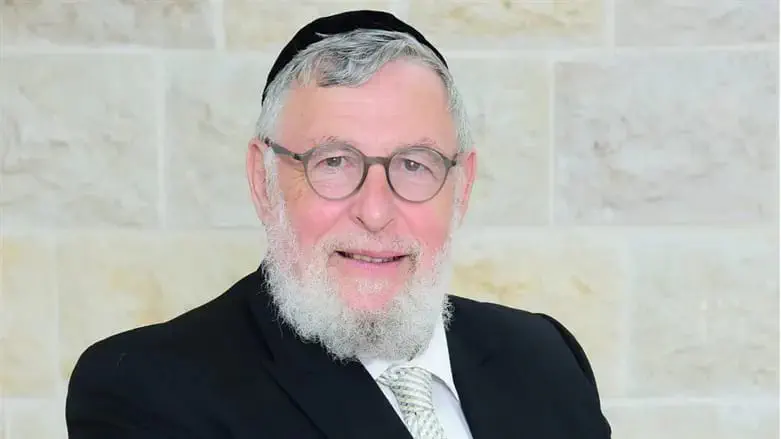
Rabbi Eliezer Simcha Weisz is a member of the Chief Rabbinate Rabbinic Council.