
For part I, click here.
Israel’s relations with the so-called Islamic world are more extensive, contradictory and strategically important than the familiar diplomatic map suggests. From the Gulf monarchies to Central Asia, from North Africa to Southeast Asia, the supposed solidarity of Muslim countries conceals a fascinating assortment of friendships, rivalries, commercial partnerships and geopolitical calculations.
There are Muslim countries that recognize Israel, that refuse to do so, that purchase Israeli weapons, that prohibit Israeli passports, that rely on Israeli energy, and whose leaders denounce Zionism while being attracted to Israeli technology.
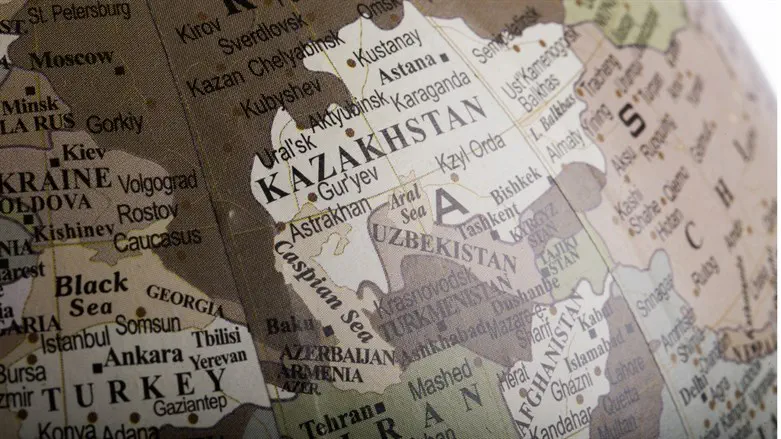
In Part 2 of our survey of Israel’s relationship with the Islamic world, we turn our gaze to Iran, Turkey and Central Asia.
IRAN, TURKEY AND CENTRAL ASIA: THE OTHER MUSLIM WORLD
Azerbaijan: Azerbaijan is one of Israel’s most important strategic partners. Their relationship combines energy, military technology, intelligence cooperation and shared concerns about Iran. Azerbaijan supplies a substantial share of Israel’s imported crude oil, while Israel is a major supplier of sophisticated military equipment to Baku.
The partnership is especially intriguing because Azerbaijan is predominantly Shia Muslim, yet maintains a close relationship with Israel despite its difficult relations with neighboring Iran.
Azerbaijan’s location on Iran’s northern border creates obvious intelligence and security considerations. Baku has sought to avoid direct involvement in Israeli-Iranian military confrontations.
Relations continued to deepen during 2026. Israeli Foreign Minister Gideon Sa’ar visited Azerbaijan in January, while President Isaac Herzog met President Ilham Aliyev in Baku in October.
Azerbaijan is compelling evidence that the supposedly unbridgeable divide between Israel and Shia Islam is neither inevitable nor particularly useful as a geopolitical explanation. National interests have proved more persuasive than sectarian affiliation.
Iran: Israel and Iran maintained extensive political, military, intelligence and commercial cooperation under Shah Mohammad Reza Pahlavi before the 1979 Islamic Revolution. Note that Iranians are not Arabs.
The Islamic Republic reversed that relationship, making hostility toward Israel one of its revolution’s defining principles. For decades, the confrontation unfolded through intelligence operations, cyberattacks, covert action, regional proxy organizations and competition over Iran’s nuclear and ballistic missile programs.
That indirect confrontation escalated into open warfare in 2025 and again in 2026, when Israeli and American military operations targeted Iran.
Iran’s support for Hezbollah, Hamas, the Houthis and other militias in Iraq and Syria has made it the principal organizing force behind a network of armed groups threatening Israel from multiple directions.
Yet an important qualification remains. Iran’s hostility is ideological and institutional; there is little animosity between the Iranian and Israeli people, unlike in the Arab world.
Kazakhstan: Kazakhstan established diplomatic relations with Israel in 1992, shortly after achieving independence from the Soviet Union.
Relations have developed across agriculture, water management, healthcare, technology, energy and commercial investment. Kazakhstan’s extensive natural resources and Israel’s technological capabilities offer considerable scope for cooperation.
In November 2025, Kazakhstan formally announced that it had joined the Abraham Accords. The decision was politically significant but did not represent a new normalization agreement, since relations had existed for more than three decades.
Cooperation continued in 2026. A bilateral economic commission convened in November, identifying opportunities in artificial intelligence, critical minerals, cybersecurity, agriculture and water technologies.
Kazakhstan’s foreign policy reflects its familiar balancing act among Russia, China, Europe, the US and regional powers. Israel has become another valuable partner in that diversified diplomatic portfolio.
Kyrgyzstan: Kyrgyzstan maintains diplomatic relations with Israel dating from the early post-Soviet period. The relationship is modest, with limited cooperation concentrated in agriculture, water management, medical expertise and technical development.
Kyrgyzstan’s significance lies less in bilateral trade or military cooperation than in the broader pattern of Central Asian states maintaining relations with Israel independently of the Arab-Israeli conflict.
Tajikistan: Tajikistan has diplomatic relations with Israel, established after the Soviet Union dissolved. Cooperation remains limited, concentrating on technical and development-related exchanges. Tajikistan’s geographic proximity to Afghanistan and its exposure to regional security challenges provide possible areas of common interest.
Its relations with Israel have generally been pragmatic rather than ideologically driven.
Turkey: Turkey was the first Muslim country to recognize Israel in March 1949. For much of the late 20th century, the countries enjoyed substantial economic, military and intelligence cooperation.
Relations deteriorated sharply under Turkey’s deranged President Recep Tayyip Erdogan, particularly over Palestinian Arab issues, the 2010 Mavi Marmara incident and Turkey’s relationship with Hamas.
After a brief diplomatic rapprochement in 2022, the Gaza war produced another severe rupture. Ankara halted direct trade and flights, recalled its ambassador and adopted increasingly confrontational and, at times, unhinged rhetoric.
Crucially, however, diplomatic relations have not been severed. Israel appointed a new senior diplomatic representative to Ankara in September 2026, even though normal embassy operations remained suspended.
Economic geography also refuses to cooperate fully with political declarations. Azerbaijani crude continues to reach Israel through the Baku-Tbilisi-Ceyhan pipeline system, despite Turkey’s restrictions on direct trade.
Turkey and Israel remain geopolitical competitors across several theaters, including Syria and the Eastern Mediterranean. Their relationship is an uncomfortable mixture of historical cooperation, contemporary hostility and interests that cannot be wished away.
Turkmenistan: Turkmenistan established diplomatic relations with Israel in 1993. Israel opened an embassy in Ashgabat in 2013 and inaugurated new permanent premises in 2023.
The countries have cooperated in agriculture, healthcare, water management, commerce and technical development. Turkmenistan’s enormous natural gas reserves also offer potential energy-related interests.
Its policy of permanent neutrality shapes the relationship. Ashgabat avoids alignment with regional antagonisms while maintaining relations with countries that have conflicting interests. Israeli-Turkmen contacts continued in 2026, illustrating the usefulness of patient diplomacy in a country bordering Iran.
Uzbekistan: Uzbekistan established diplomatic relations with Israel in February 1992. Israel opened an embassy in Tashkent that year, and Uzbekistan has established its own diplomatic mission in Israel.
Cooperation has included agriculture, irrigation, medicine, technology, education and tourism. Uzbekistan’s Jewish history, particularly the centuries-old Bukharan Jewish community, supplies an additional cultural connection.
The relationship is one of Israel’s more established partnerships in Central Asia, reflecting Uzbekistan’s interest in technical modernization and diversified international relationships.
Nachum Kaplanis a journalist and commentator. He has 25 years media experience and held senior international roles at Reuters and IFR. He holds a B.A. in Politics and Indonesian from Monash University. He is also a practising psychotherapist. His popular substack is Moral Clarity: Truths in Politics and Culture