

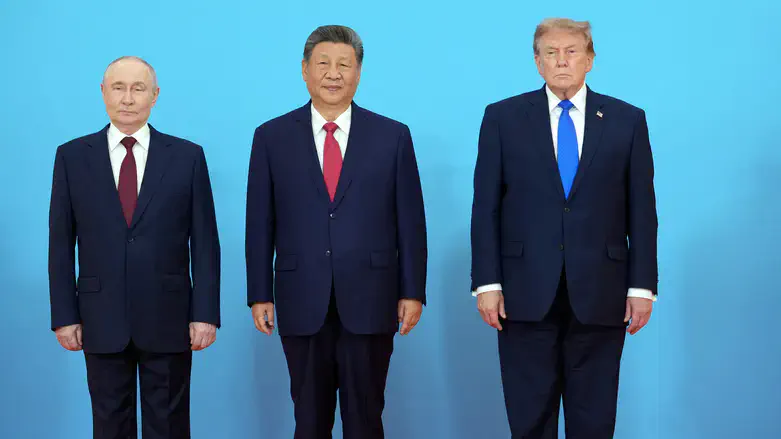
Mohammad Mokhber, an adviser to Iranian Supreme Leader Mojtaba Khamenei, claimed on Friday that the United States had lost its ability to mobilize international support against Tehran, following President Donald Trump's trilateral summit with Chinese President Xi Jinping and Russian President Vladimir Putin.
In a post on X, Mokhber argued that the summit in Shenzhen, China, had demonstrated a decline in Washington's regional influence.
"The Shenzhen summit in China sent a clear message to the region that the United States no longer has sufficient influence to mobilize support against Iran," he wrote.
Mokhber also claimed that Trump had returned from China without achieving his objectives, describing the summit's concluding statement as unfavorable to the American president.
He reiterated Tehran's refusal to reopen the Strait of Hormuz without securing concessions from Washington.
"The Strait of Hormuz is undoubtedly a red line for Iran," Mokhber stated, adding that Tehran would ensure its operation according to the seven conditions it had previously presented.
His remarks came a day after Trump concluded talks with Xi and Putin in China. The 90-minute meeting, described as historic, ended without major agreements on several contentious issues, including Iran, Ukraine, and Taiwan.
The three presidents issued a joint statement, described as a "Peace Declaration," emphasizing the importance of maintaining secure energy transportation routes and preventing nuclear confrontations.
Trump said Thursday that he was in no hurry to decide on further action against Iran, including the possibility of renewed military operations early next year.
Iran has submitted a revised proposal for reopening the Strait of Hormuz, which has remained largely closed since the war began on February 28.
The proposal includes seven demands, among them an end to fighting on all fronts, the lifting of Western sanctions, the termination of the US naval blockade of Iranian ports, and the release of Iranian assets frozen abroad.
Tehran has maintained that these conditions must be addressed before negotiations can advance.
Earlier this month, Iran rejected Washington's response to its proposal, insisting that its demands remain unchanged.
Iranian Parliament Speaker Mohammad Bagher Ghalibaf reiterated the conditions on November 12, saying Tehran was awaiting a formal American response.
Qatari and Pakistani mediators have continued efforts to narrow the differences between the two countries, but no agreement has been announced.