


Some Jews in the Netherlands are increasingly reluctant to wear a kippah or display Jewish symbols in public amid growing concerns about antisemitism. Others are considering leaving the country and immigrating to Israel.
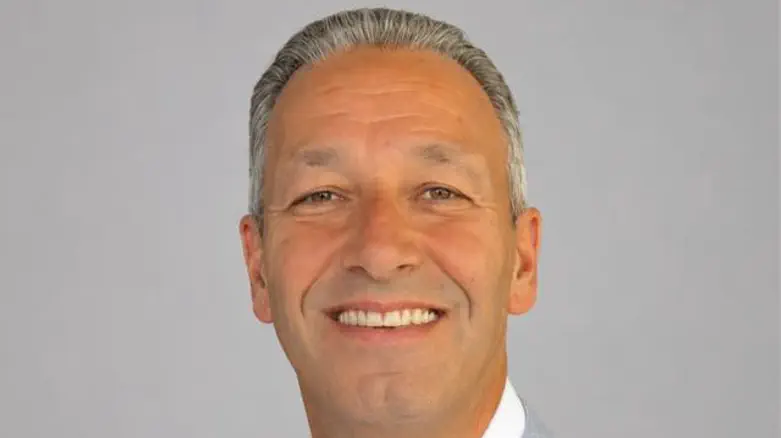
In an interview with Arutz Sheva-Israel National News, Doron Sanders, president of the Mizrachi movement in the Netherlands, described a deteriorating sense of security within the Jewish community, particularly since the October 7 Hamas attack.
"There has been an increase in antisemitism, especially since October 7," Sanders said. "People are increasingly afraid to walk down the street wearing a kippah because they could face verbal and sometimes physical attacks for being visibly Jewish."
According to Sanders, hostility toward Israel is increasingly directed at Dutch Jews, regardless of their personal views or involvement in events in the Middle East.
"They conflate Zionism and Judaism, and some Jews do not feel safe in such circumstances," he explained.
The concerns extend beyond public spaces. Sanders said some Jews have moved the mezuzahs from their doorposts to avoid drawing attention to their religious identity, although most continue to display them.
"Some people also move their mezuzahs, but as far as I know, most Jews leave them at the entrance. I am not aware of any case of harassment over a mezuzah, but the feeling is very difficult," he said.
Sanders also described attempts by pro-Palestinian activists to disrupt events associated with Israel.
"Pro-Palestinian activists try to prevent any event they hear is connected to Israel, and of course they regularly turn up to protest against these events," he said.
He added that some demonstrations feature expressions of support for Hamas.
"There are many demonstrations that can be difficult. Some participants even openly support Hamas," he said.
The atmosphere has also affected everyday life, including at universities and workplaces.
"Many feel unsafe if they identify themselves as Jews in public places, at universities or in their workplaces," Sanders explained.
Sanders noted that synagogues, schools, and other Jewish institutions have operated under heavy security for years, with police, military police officers, and private guards providing protection.
"Our Jews have grown up with this reality. It has not improved," he said.
Nevertheless, Sanders believes conditions have deteriorated further in recent months, reflecting a combination of social, political, and media developments.
"I cannot put my finger on one thing. The situation is getting progressively worse, both here in particular and in Europe in general," he said.
Sanders also pointed to economic measures targeting Israel, citing legislation he said recently took effect prohibiting imports from Judea and Samaria, with potential prison sentences for violations.
He criticized Dutch media coverage of the war in Gaza and the positions taken by parts of the country's political establishment.
"There are many incidents. The media are largely opposed to Israel, mainly through their coverage of the war in Gaza. The political establishment, particularly on the left, is very anti-Israel," he argued.
According to Sanders, the cumulative effect has left many Jews feeling increasingly vulnerable, even if they have not personally experienced antisemitic harassment.
The situation has also prompted some community members to consider immigrating to Israel.
"There are Jews who are considering it," Sanders said, while emphasizing that leaving the Netherlands remains a difficult decision for people who have spent their entire lives there.
"It is not easy to leave a country where you grew up and where your entire life is," he explained.
Sanders said a small number of Dutch Jews are exploring relocation to Israel because of the worsening atmosphere, although he stressed that this has not yet developed into a broader trend.