

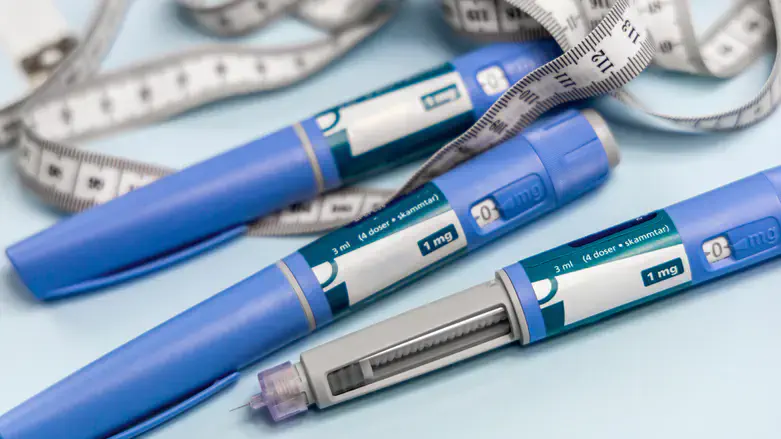
The US Food and Drug Administration (FDA) has issued a new safety warning concerning some medications used to treat diabetes and support weight loss, following findings indicating an increased but low risk of developing a rare eye condition that can cause sudden and sometimes irreversible vision loss.
Following its review, the agency ordered updates to the safety labels of the relevant medications to include information about the potential risk.
According to the report, the guidance issued last night (Monday) concerns GLP-1 medications, including well-known diabetes and weight-loss drugs such as Ozempic, Wegovy, Mounjaro and Zepbound. The warning concerns an eye condition known as NAION, which results from impaired blood supply to the optic nerve.
The decision followed a comprehensive FDA review launched after the publication of a study on the subject in July 2024. The review reexamined data from 126 clinical trials and found a slightly higher rate of the condition among patients receiving GLP-1 medications than among those receiving a placebo.
According to the published data, the rate among patients taking the medications was 6.4 cases per 100,000 patient-years of treatment, compared with 3.8 cases per 100,000 patient-years in the placebo group. The figures indicate an increased risk but also illustrate that the condition is relatively rare.
NAION damages the optic nerve as a result of disrupted blood supply. One of its main features is the sudden onset of reduced or blurred vision, usually in one eye and without pain. In some cases, the vision damage may be irreversible. Known risk factors include smoking, diabetes, high blood pressure and kidney disease.
Following the findings, the FDA is urging patients to watch for sudden changes in vision, including blurring, a narrowing of the visual field known as "tunnel vision", blind spots or changes in color perception. According to the guidance described in the report, patients experiencing these symptoms should seek an examination by an ophthalmologist and consider temporarily suspending treatment. However, the agency is not recommending that all patients stop using the medications following the warning.
In Israel, the Association of Diabetes Nurse Specialists also addressed the report, warning against stopping medication without medical supervision. The association stressed that patients receiving diabetes or weight-loss medications could face health risks if they discontinue treatment without medical guidance.
The association said, "Stopping treatment without supervision poses an immediate health risk. We urge patients not to stop their medication on their own." It also advised anyone concerned about the newly identified risk to consult their medical team or a diabetes nurse specialist.
The association added that any sudden change in vision requires an examination by an ophthalmologist. Patients are advised to continue treatment in accordance with medical instructions and consult their healthcare provider if they have concerns following the new warning.