

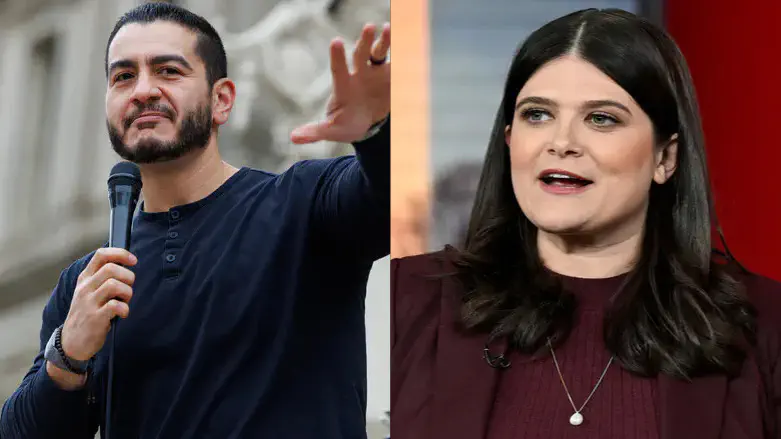
A growing dispute within the Democratic Party over support for Israel is threatening to undermine the party's chances in one of the most closely watched Senate races ahead of Tuesday's US midterm elections.
In Michigan, Democratic Senate candidate Abdul El-Sayed has refused to appear alongside former primary opponent Rep. Haley Stevens, as tensions between the two have escalated over their sharply differing positions on Israel. The dispute intensified after Stevens demanded that El-Sayed apologize for his remarks about Israel. The disagreement has even prompted Stevens' husband to announce that he intends to vote for Republican Senate candidate Mike Rogers instead.
At the center of the conflict are the candidates' opposing positions on Israel. Stevens is considered a strong supporter of the Jewish state and has previously declared that Israel "appears in my dreams." El-Sayed, meanwhile, has accused Israel of committing genocide in the Gaza Strip and drawn comparisons between Israel and Hamas.
The two candidates previously clashed over Israel during the Democratic primary in August. The issue became a central theme of the campaign, which was marked by fierce exchanges. El-Sayed ultimately defeated Stevens by less than one percentage point. Following the primary, Democratic Party officials sought to repair the divisions and unite the party ahead of the general election, in which El-Sayed is facing Republican candidate Mike Rogers. However, events over the weekend demonstrated that the divisions remain far from resolved.
The latest confrontation followed an interview Stevens gave on Friday, during which she expressed frustration over El-Sayed's refusal to answer a question about which country poses a greater threat to the United States: Israel or Iran.
Stevens subsequently issued a public statement demanding that El-Sayed apologize for his comments about Israel. She also called on him to condemn a campaign advertisement aired in his support, despite the fact that he was not involved in producing it. The advertisement suggested that American aid to Israel contributes to the rising cost of living in the United States.
El-Sayed rejected Stevens' demands and responded with a statement of his own, accusing his former primary rival of appearing "determined to reopen a primary that ended three months ago."
The dispute has also spilled into the candidates' personal circles. Stevens' husband told local media that he plans to vote for Rogers, the Republican candidate challenging El-Sayed for the Senate seat.