

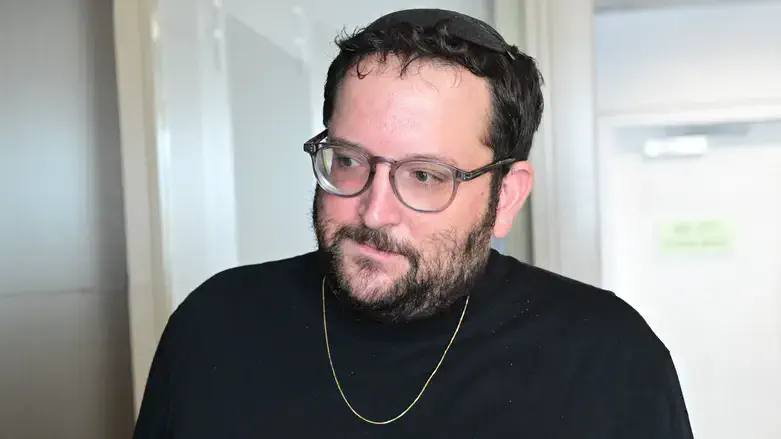
Jonatan Urich, a close adviser to Prime Minister Benjamin Netanyahu, confirmed during his interrogation in the Qatargate affair that he had received hundreds of thousands of shekels for activities intended to promote Qatar's image. He estimated that his work on the project continued until mid-to-late 2024, many months after the October 7 attack and in the midst of the war, according to revelations published by Channel 12 News.
The disclosed testimony indicates that Urich did not inform the Prime Minister about his work on the Qatari project. According to Urich, the parties for whom he worked were also unaware of his activities on Netanyahu's behalf.
During his interrogation, he rejected the allegation that the two roles created a conflict of interest, insisting that he saw nothing morally or professionally improper in his conduct.
One of the central questions investigators sought to clarify was when Urich's relationship with the Qatari parties ended. Initially, Urich had difficulty providing an exact date and gave differing answers regarding when his work concluded.
When asked whether he had continued working for the Qatari parties after the October 7 massacre, he replied, "Of course, not in Israel."
He later said he could not remember whether the project had ended before or after the attack, estimating that the difference could have been approximately two months in either direction.
However, later in the interrogation, when asked about more recent dates, he provided a different estimate.
Asked whether his work had ended in early 2024, he said he could not remember. When asked whether it had continued until the middle of that year, he replied, "I tend to think mid-to-late 2024."
According to Urich, the person who informed him that the project had ended was Srulik Einhorn, with whom he had been associated in the course of the work.
Alongside the question of timing, investigators sought to determine how Urich's work for Qatar was conducted alongside his activities in Israel.
During the interrogation, he was confronted with the apparent contradiction between promoting Qatar's image internationally and working on messages critical of Qatar as part of his duties for the Prime Minister.
Urich explained that, from his perspective, these were two separate areas of activity and that he was not required to report the project to Netanyahu.
He added that, as an external adviser, he believed he had no obligation to disclose his other professional engagements.
When asked whether this meant that neither side knew about his work for the other, he answered in the negative.
Investigators also confronted Urich with Netanyahu's testimony, according to which the Prime Minister had been unaware that his adviser was working for Qatari parties.
According to the statements presented during the interrogation, Netanyahu had even said there was "no chance" that Urich had received money from Qatar.
Responding to the Prime Minister's remarks, Urich said, "That's between him and me."
Even when investigators asked why he had not stopped working on the project following the October 7 attack, or at least informed Netanyahu about the arrangement, Urich continued to reject the suggestion that he had acted improperly.
Later, investigators confronted him with the allegation that the investigative materials showed he had received payment to promote Qatar's interests following the October 7 attack. Urich rejected the allegation, replying, "Not true."