


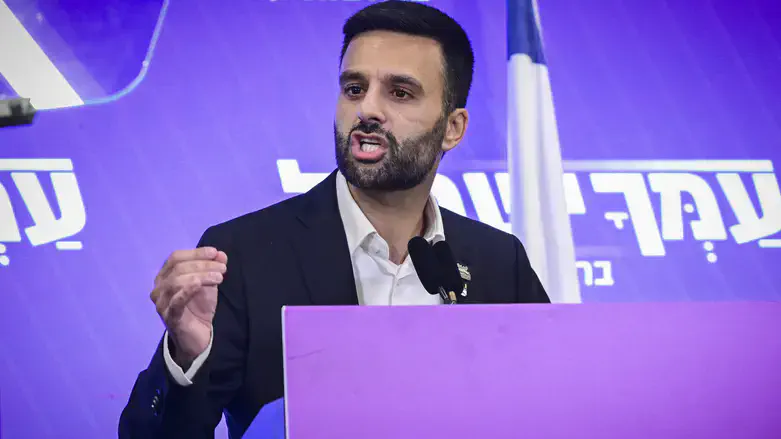
In an unusual instance of criticism from within Channel 14 directed at the Likud party, Yitzhak Abuhatzira, editor of the channel’s website, published a column attacking Likud and Religious Zionism chairman Bezalel Smotrich over their treatment of Yoseph Haddad since he entered the election campaign.
At the center of the column is the argument that attitudes toward Haddad changed within a short period of time: From someone who was praised by figures on the right for his public diplomacy efforts on behalf of Israel, he became a target of political attacks after he began competing for the votes of that same constituency.
Abuhatzira recalled that just two months ago, Gadi Eisenkot came under criticism after comparing Haddad to Mansour Abbas.
“Likud, with its cynicism, would sign Yoseph Haddad up as a Knesset member today. It doesn’t say: He’s an Arab, I won’t sit with him," Eisenkot said at the time in an interview with Channel 13 News.
The remarks prompted a campaign against Eisenkot, in which he was accused of comparing Haddad, a former Golani Brigade soldier and Israeli public diplomacy activist, to Abbas. Prime Minister Benjamin Netanyahu also published a video attacking Eisenkot at the time and, as Abuhatzira noted, lavished praise on Haddad.
Another controversy surrounding Haddad erupted after Raviv Drucker claimed that Jews viewed him as a “pet Arab." In that case as well, Abuhatzira wrote, the remarks sparked angry reactions from those who viewed Haddad as a popular public diplomacy activist working on Israel’s behalf both at home and abroad.
According to Abuhatzira, however, the picture changed with the beginning of the election campaign. He directed his criticism primarily at Likud, arguing that parties that had previously embraced Haddad began attacking him once he became a political rival.
Abuhatzira addressed Likud’s claim that Haddad and Amcha Yisrael chairman Ofer Winter had already “made a deal" with Avigdor Liberman, even though, according to Abuhatzira, the party has repeatedly denied this.
“Within weeks, Haddad went from being a national asset, an Israeli hero and proof that an Arab can integrate into the national camp, to a rival people need to be warned about," he wrote.
According to Abuhatzira, the change did not occur because Haddad had stopped advocating for Israel or changed his attitude toward the country, but “simply because now he might take votes."
The column also directly criticized Smotrich. The Religious Zionism chairman published an old video of Haddad in which he had expressed support for the establishment of a Palestinian state.
“Who are you, Mr. Bezalel Smotrich, and what have you done in recent years for Israel’s public diplomacy efforts around the world that makes you feel so comfortable dismissing Yoseph Haddad’s contribution with a single post? And who are you, Likud, to turn a man you were praising just moments ago into a political suspect simply because he decided to run against you?"
Abuhatzira also addressed the possibility that Amcha Yisrael could later make decisions that would be unacceptable to right-wing voters. He assessed that the party would not “pull a Bennett," but added that even such a scenario would not retroactively change Haddad’s work on Israel’s behalf.