

Amine Ayoub, a fellow at the Middle East Forum, is a policy analyst and writer based in Morocco. Follow him on X: @amineayoubx
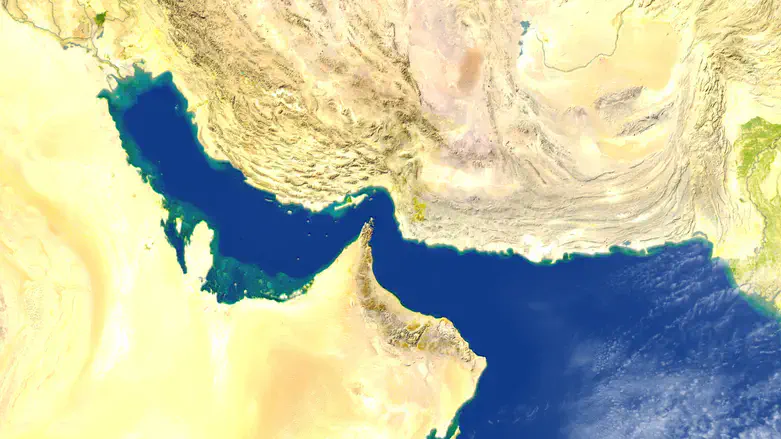
The massive surge of three American aircraft carrier strike groups and ten thousand additional troops into the Persian Gulf is being framed as an unyielding display of military resolve. Yet the reality in Washington is governed as much by electoral calendars as by naval doctrine. The White House’s explicit rejection of Tehran’s latest proposal to open the Strait of Hormuz in exchange for immediate sanctions relief highlights a deliberate strategy: hold the line through the upcoming U.S. midterm elections, maintain maximum economic pressure, and defer high-risk kinetic operations.
Tehran understands this political clock intimately. The current standoff is not merely a tactical naval deployment, but a high-stakes waiting game where both sides are maneuvering for leverage ahead of a post-midterm window.
This prolonged posture imposes severe operational and economic costs that standard deterrence rhetoric ignores. Cruising through the narrow corridor of Hormuz, where roughly twenty million barrels of petroleum transit daily, commercial shipping lines face skyrocketing insurance premiums and route diversions that threaten global energy markets.
Simultaneously, naval forces are absorbing a steep attrition rate. Firing two-million-dollar SM-2 and SM-6 interceptors to neutralize waves of twenty-thousand-dollar attack drones drains high-end Western missile inventories that take years to replenish. A prolonged war of attrition in the Gulf directly degrades the global magazine depth required to manage secondary regional crises.
At the same time, viewing Tehran as an unconstrained mastermind misreads the regime's fragile internal position. Months of regional conflict, severe currency devaluation, and widespread domestic unrest have left the Islamic Republic economically battered and structurally vulnerable. Iran’s rejection of structural concessions and its insistence on immediate blockade relief reflect desperation rather than strength.
Disrupting trade in Hormuz is a high-risk gamble to force Western concessions without provoking a direct military confrontation that the regime lacks the conventional capacity to survive. Yet in a compressed chokepoint crowded with warships and commercial traffic, the risk of miscalculation, whether from a rogue field commander or a sea mine targeting a foreign vessel, remains extraordinarily high.
The strategic calculus among Gulf monarchies is equally nuanced. While Riyadh and Abu Dhabi desperately want Iran’s maritime intimidation dismantled, their willingness to join an overt anti-Iran coalition is strictly limited by geography and vulnerability. Haunted by past strikes on critical energy infrastructure, Gulf capitals refuse to serve as the visible launchpad for Western offensive strikes. Their appetite extends to quiet airspace coordination, early-warning radar sharing, and maritime domain awareness, but stops short of hosting explicit offensive operations against Iranian territory. Expecting a public, unified Arab naval front overestimates regional willingness to absorb direct Iranian retaliation.
Navigating this complex landscape requires moving beyond passive monitoring and focusing on precise operational integration with U.S. Central Command. Force projection into the Persian Gulf is structurally constrained by distance, meaning the primary value lies in asymmetric intelligence and specialized defense capabilities. Military intelligence can provide high-value, real-time targeting data on IRGC drone launch sites, underground missile depots along the southern Iranian coast, and fast-attack naval command hubs. Furthermore, integrating specialized electronic warfare assets, anti-mining expertise, and joint air-defense tracking over regional flight corridors allows the defense establishment to reinforce Western deterrence without overextending its own naval footprint.
The battle for the Strait of Hormuz is not a distant energy dispute, nor is it a isolated clash between Washington and Tehran. It is a tightly linked arena where American political timelines, Iranian economic survival, and Gulf security constraints intersect. Deterrence in this environment cannot be sustained on symbolic naval movements alone.
By recognizing the genuine political constraints in Washington, the operational limits of Gulf participation, and the exact intelligence assets required, decision-makers can ensure that any regional escalation is met with calculated, overwhelming strength.