
We say the words on 19 days of the year, or 22 days in exile outside of Israel, in the Mussaf (the Additional Service) of Rosh Hashanah, Yom Kippur, seven days of Sukkot, Shmi’ni Atzeret/Simchat Torah (split into two days outside of Israel), seven days of Pesach (eight days outside of Israel), and the one day of Shavuot (two days outside of Israel):
אָבִינוּ מַלְכֵּנוּ גַּלֵּה כְּבוֹד מַלְכוּתְךָ עָלֵינוּ מְהֵרָה, וְהוֹפַע וְהִנָּשֵׂא עָלֵינוּ לְעֵינֵי כָּל חָי; וְקָרֵב פְּזוּרֵנוּ מִבֵּין הַּגּוֹיִם, וּנְפוּצוֹתֵנוּ כַּנֵּס מִיַּרְכְּתֵי אָרֶץ, וַהֲבִיאֵנוּ לְצִיּוֹן עִירְךָ בְּרִנָּה...
“Our Father, our King, reveal the glory of Your Kingdom over us swiftly; appear and be exalted over us in the eyes of all who live; bring near those of us who are scattered among the nations, and ingather those of us who are dispersed from the ends of the earth, and bring us to Zion Your city with joyous song…"
This is the translation in every Siddur (Prayer-Book) and Machzor (Festival Prayer-Book), and is a powerful prayer for קִבּוּץ גָלֻיּוֹת, Kibbutz Galuyot (the Ingathering of the Exiles).
But I suggest far more powerful interpretation of this prayer, relying on understanding one ambiguous word differently and a very subtle change in the phrasing.
The one ambiguous word is כַּנֵּס, which is universally understood to be the verb “ingather". But it is also the noun נֵס, meaning “miracle" or “banner", with the prefix כַּ־ meaning “like" or “as". Hence כַּנֵּס, “like a miracle" or “like a banner", as in Isaiah 30:17.
And I suggest changing the phrasing from:
וְקָרֵב פְּזוּרֵנוּ מִבֵּין הַּגּוֹיִם, וּנְפוּצוֹתֵנוּ כַּנֵּס מִיַּרְכְּתֵי אָרֶץ...
To:
וְקָרֵב פְּזוּרֵנוּ מִבֵּין הַּגּוֹיִם וּנְפוּצוֹתֵנוּ, כַּנֵּס מִיַּרְכְּתֵי אָרֶץ...
putting the comma after the word וּנְפוּצוֹתֵנוּ instead of before. This completely changes the meaning of this Prayer.
Instead of:
“Bring near those of us who are scattered among the nations, and ingather those of us who are dispersed from the ends of the earth…";
It now reads:
“Bring near those of us who are scattered among the nations and those of us who are dispersed - as a miracle from the ends of the earth".
The original text, of course, contained none of the punctuation of modern languages, so the phrasing was left up to the individual reader; only in recent centuries did printers start using commas, periods, semi-colons, and the like. So we are free to reinterpret the text with different spacing and punctuation.
And this radically new reading recognises that when G-d ingathers us from the ends of the world, it will be as a banner or a miracle in the eyes of all who live.
The restoration of Jewish national sovereign independence in Israel isn’t merely one more nation becoming independent in a post-colonial world, like India, Uganda, Zimbabwe, Namibia, and a whole host of other countries.
Israel’s national sovereign independence is the single most persistent theme of all the Prophets; it is the most persistent theme in our liturgy; it is the very definition of redemption, the days of Mashiach.
The restoration of Israel’s national sovereign independence in the Land of Israel was 3,000 years of Jewish prophecy coming true.
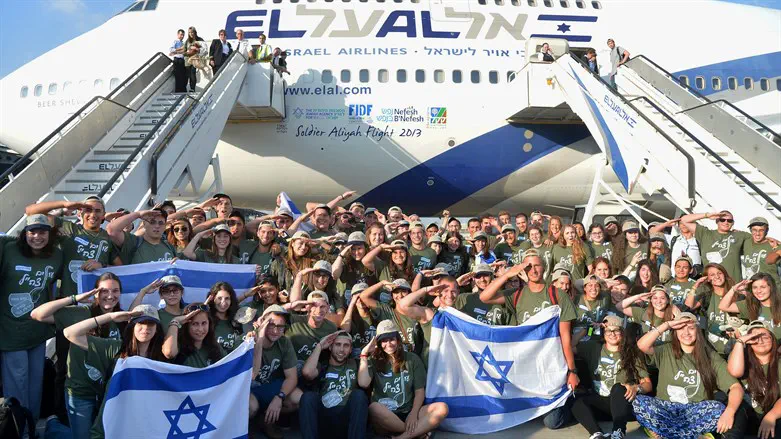
The Ingathering of the Exiles from Yemen and Poland, from Algeria and Hungary, from Britain and Iraq, from America and Afghanistan, from Germany and Iran, from a hundred other countries of exile, was a miracle, as a banner displaying G-d’s might and the truth of His Prophets’ words to all who live.
This is especially relevant on Sukkot - the Festival which is simultaneously both particularistic and the most universalistic of all our festivals:
Particularistic because it recalls and celebrates how G-d gave us sukkot (booths) to swell in when He brought us out from Egypt (Exodus 23:43).
And universalistic because it is the Festival which in the future time to come all nations will have the opportunity to celebrate (Zechariah 14:16-19).
And it is the Festival on which we sacrifice 70 young bulls over its seven days - 13 on the first day, 12 on the second, down to 7 on the seventh day (Numbers 29:12-32) for a total of 70 - corresponding to the 70 nations of the world (Sukkah 55b).
So it is particularly apposite that on this Festival, during which all who live will have the opportunity to celebrate our Redemption, we pray that in the eyes of all who live:
קָרֵב פְּזוּרֵנוּ מִבֵּין הַּגּוֹיִם וּנְפוּצוֹתֵנוּ, כַּנֵּס מִיַּרְכְּתֵי אָרֶץ
“Bring near those of us who are scattered among the nations and those of us who are dispersed - as a miracle from the ends of the earth".
חַג שָׁמֵחַ, Chag sameach!