Parashat Bereishit:
Author of history
The Creation narrative demonstrates perfectly the dichotomy of the Torah: it is simultaneously the story of one particular nation-the Jewish people-and the story of all humanity.
The Creation narrative demonstrates perfectly the dichotomy of the Torah: it is simultaneously the story of one particular nation-the Jewish people-and the story of all humanity.

“Bring near those of us who are scattered among the nations and those of us who are dispersed - as a miracle [or: as a banner] from the ends of the earth".

The Four Species have some deep and important lessons to teach us about the different kinds of Jew.

Rabbeinu Bechayye ben Asher (Spain, 1255-1340), in his encyclopaedic work Kad ha-Kemach, offers some startling philosophical-kabbalistic insights into the significance of the Sukkah.
Both Abayyé and Reish Lakish said that we read the admonitions in Parashat Ki Tavo immediately before Rosh Hashanah “so that the year should finish together with its curses" - each for his own reasons. What were they?

It is supremely relevant that our national return to our homeland causes such paroxysms of fury among the nations of the world - and tragically among certain of our own people - who hate being confronted with the truth of the Torah’s decrees.

Note: The parapet around the roof of a house protects the house. “You shall not place blood in your house": inside the house - inside the national home - must be a safe place.

Giving enemies, who are sworn to our destruction, parts of Israel is equally emphatically not the Jewish way of relating to them.
As bewildering as the world can be, the parasha and haftorah assure us of our wonderful future. Our enemies, whether on the battlefields or in the international courtrooms, are destined to fail.
When the G-d of Israel decrees that it is time for His children to come home, then nothing and no one can prevent it.

This is the time to study - not just read, but to study in depth - the messages of the 9th of Av, of Parashat Va'etchanan, and of Haftarat Nachamu. Though we were exiled, scattered to the four winds, beaten, persecuted, slaughtered in our millions - we are still here to tell of our history - and we came back home.
2,000 years on, we, the Jewish Nation, are still here to commemorate our history; while the mighty empires which defeated us have long centuries since crumbled into the dust of history. Read the story here.
Zelophehad's daughters stand as veritable beacons during these dark days, showing us where love for the Land of Israel can lead us.
Tradition has it that this is the day Joshua told the sun to stand still. But why?
We can but look in despair at Jewish communities throughout the world, and ask: Is there a single Rabbi who reaches the level of Korach, Datan, and Aviram, the Tzaddikim of the Sinai Desert, who were plunged into such despair at being deprived of the Land of Israel that they lost all faith?

“We’re all better off, far better off, in the desert, without any distractions," they said. "Maybe one day when there is a Holy Temple in the Land, after Mashiach will have come, it will be time for us to enter the Land of Israel and possess it. But until then, we’re clearly better off remaining in the desert."
G-d did not reject His nation. Yes, were in exile for close on 2,000 years. Yes, even when we finally re-established independence in our ancestral homeland it was only in a fraction of the historical Land of Israel.
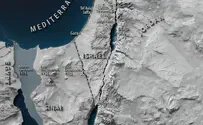
Why did G-d interrupt the sequence of the mitzvot of the Kohanim with the mitzvot of the Festivals?
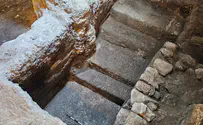
The scene the prophet depicts as one that shows that Redemption is here is so familiar in today’s Jerusalem that we don’t even recognize it as anything to get excited about.

The faces of the fallen swim before my eyes...
Isaiah’s magnificent, inspiring prophecies are coming true before our very eyes. They are no longer a matter of faith: they are now tomorrow’s headlines.

The tragic deaths of Nadav and Avihu in Parashat Shemini warn of the terrible danger of humans following their own decrees instead of G-d’s, even when they have the holiest and most exalted of intentions.

We begin our Seder service with a modest invitation: “This is the bread of affliction which our fathers ate in the land of Egypt; all who are hungry - let them come and eat!." Why so meager?

The Pesach sacrifice was a massive act of defiance against the idolatrous Egyptian oppressors. And the Haftarah-reading for Shabbat Hagadol is the very last prophetic vision ever.

Is there any organic connection between Parashat Vayikra, Nissan, and Purim?

This Shabbat is the confluence of three components of our calendar: the aftermath of Purim, Parashat Ki Tissa, and Shabbat Parah.
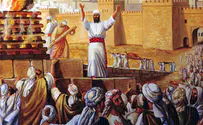
Khomeini went the way of Haman, Israel continues to pound its enemies as recorded in the Megillah - and we thank G-d for our deliverance.
Megillat Esther never once mentions G-d; Parashat Tetsave does not mention Moses; Amalek seemed to have disappeared from history. But G-d gives us the discernment to perceive them all.

The construction of the Mikdash/Mishkan/Tent of Meeting transformed us from a collection of families to a united nation, united in in our worship of G-d.
When will we all know Khomenei is defeated? Opinion.

Shabbat Shekalim is the first of five special Shabbatot, over seven weeks.

We have two different opinions as to when Yitro joined, and Zipporah rejoined, the Children of Israel: shortly before the Giving of the Torah, or shortly after it.
The story of the man who led Israel to victory, who defeated the enemy nations who were oppressing us - and never requested recognition.

The Exodus and the drowning of the Egyptians in the Red Sea were one and the same thing. One without the other is incomplete. A lesson for Hamas in our time.
We have to build our homeland in the Name of Hashem, the G-d of Israel.

Hopes which are destroyed cause deeper despair than complete hopelessness. The Jews had hoped for a new Pharaoh who would ease their lot, but the opposite occurred. Where to turn?
There is disagreement among our commentators if these are prophecies of the times of the mashiach, or if they refer to other events.

There is no guarantee that our enemies will no longer attack us here in Israel - but at least their sadistic joy is guaranteed to be short-lived and thoroughly repaid. And one day we will sing a Psalm for the coming of Mashiach.

The many impure sources of Redemption are a defense against the Satan - the adversary, whose purpose is to prevent the Redemption from coming into the world.

The Maggid of Mezritch's yahrzeit is also the day the Alter Rebbe was released from Czarist prison - and the day that, many years later, Rabbi Moshe Tzvi Neria, founder of the Bnai Akiva yeshiva network, returned his soul to his Maker. Here are their stories.

What defines Eisav? Is it the vicious Jew-hatred which has defined so much of Christian civilisation? Or is it the genuine Christian love and support for Jews and for Israel that we have seen, particularly in this current war?
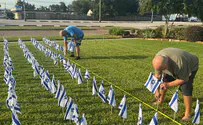
It was not about Kashrut or Shabbat or prayer, but something deeper and more pervasive.

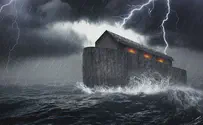
Water has been a defining component of Israel’s history, from Noah’s flood through the lives of our Patriarchs to our own time. It is part of the symbiotic connexion between the Jewish nation and the Land of Israel. As the Land has welcomed its nation back home, so the nation has rejuvenated the Land.
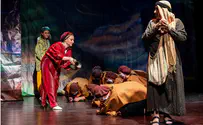
The whole sorry episode of Sodom and Gomorrah teaches is that yes, there can be an entire metropolis, and entire region, in which every single man, woman, and child, down to the new-born baby, is judged and found to be evil.
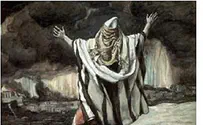
The Prophetic consolation after the Three Weeks lasts well into the next year. We receive Isaiah’s healing message of consolation not for seven weeks, but for ten weeks.

The very essence of the Land of Israel is that it is dependent upon G-d’s constant care. And the most immediately obvious expression of that care is the rain.

Noah, Daniel and Job saw three worlds. So have we.
The opening word of the Torah, בְּרֵאשִׁית, “in the beginning”, already encoded all of what was to come, the potential of everything which will ever be.

How to pronounce it and why.

Jewish history isn’t random happenstance; Israel’s reconstituted national sovereign independence in the Land of Israel within living memory is woven into the very fabric of G-d’s Creation; our continued sovereignty in Israel depends not on the prowess of our military, on economics, on politics, but on our connection with G-d, His Torah, and His Mitzvot.
The number of a verse, its numerology - all point to the past but also to today in this week's parasha.

These are the three tools which G-d gives us to transform His judgment from bad to good: repentance, prayer, and charity. Delving into that prayer and Mussaf.

After the mourning comes the rejoicing, after the exile comes the return home, after the destruction comes the renaissance. The Redemption is swiftly approaching, and Hashem brooks no delay in its implementation.

Just as more than two-and-three-quarters-centuries ago Hassidism burst onto Jewish history changing it forever, so too a century-and-a-half ago political Zionism - that led to anti-Zionism - burst onto Jewish history changing it forever. Who will win?

Keeping the mitzvot protects the Jew from external enemies, from natural disasters, and from becoming the agent through which G-d brings punishment into the world.

Our suffering is not yet over: that is obvious. We still face genocidal enemies dedicated to our extermination. But Israel is in the process of being redeemed in justice.

Some Torah prohibitions became clear in our time. Only in our generation have we come to see how necessary the simple, literal meaning is: Don’t destroy synagogues, don’t raze Jewish cities, don’t bulldoze Jewish houses - in Israel, “lest the Gentiles hear of it, and destroy the Land of Israel”.

This is the time to study - not just read, but to study in depth - the messages of the 9th of Av, of Parashat Va-et’chanan, and of Haftarat Nachamu.

Though Israel was defeated in its battle against the legions of Rome, it was a magnificent and inspiring defeat, a defeat which ultimately destroyed the Roman Empire.
There is a word for people who attempt to enlist foreign aid against their own country in time of war. Not a pleasant one. Opinion.