

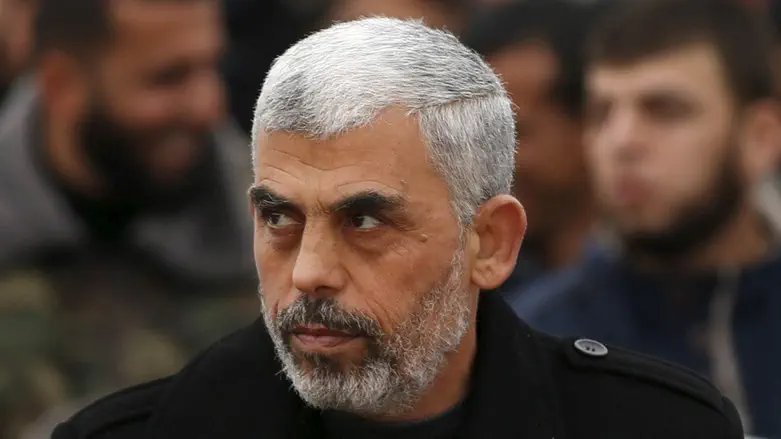
Just a few weeks before the October 7 attack, Israel received an unusual message on behalf of Hamas leader Yahya Sinwar: “An earthquake is expected in the prisons because of the prisoner issue."
The message prompted discussion within the security establishment, but the interpretation given to it in real time directed attention toward the Elizabeth Tsurkov affair rather than the possibility of an impending attack.
This evening (Tuesday), Channel 12 News revealed new details about the circumstances that led security and intelligence officials to link Sinwar’s remarks to the Israeli researcher who had been kidnapped and was being held in Iraq.
According to the report, at the same time that the message arrived, Israel identified an intelligence development concerning Tsurkov: A senior Iranian official approached Hamas and proposed that the organization assume responsibility for negotiations for her release. At the same time, the pro-Iranian Iraqi organization holding her agreed to the move.
For intelligence officials, the two developments combined to form a single picture. “Sinwar’s message fit the new intelligence picture like a glove," officials who participated in the discussions told Channel 12 News.
Following the message, a special situation assessment was convened at the request of the Israel Security Agency (Shin Bet). According to the report, none of the participants in the discussion raised a different interpretation of Sinwar’s remarks.
In retrospect, however, Channel 12 News reported that the message had a different meaning. The report claimed that this was Sinwar’s way of trying to obtain additional concessions from Israel and postpone the attack he was planning.
As part of the report, a senior security official also addressed a report in Haaretz according to which UAE President Mohammed bin Zayed conveyed a warning to Prime Minister Benjamin Netanyahu.
“If a message indeed subsequently reached the Prime Minister himself from Mohammed bin Zayed, it could have been the missing piece that would have prompted us to take additional, more in-depth steps," the senior official said. “Something was needed that would outweigh the reassuring signs that we had presented to ourselves. It is possible that this could have been that sign."