

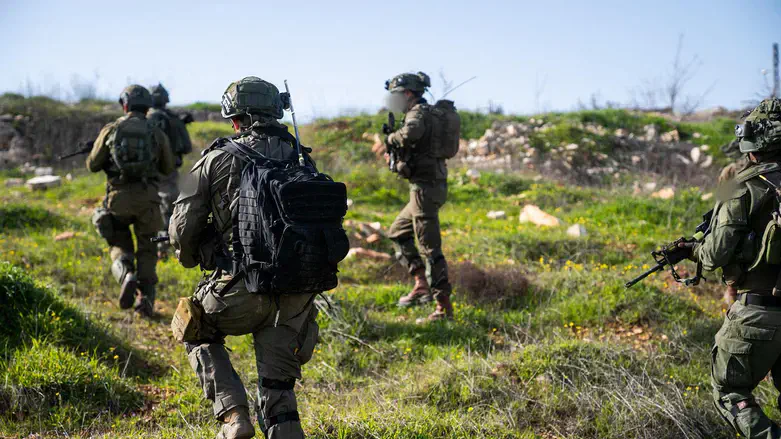
Jay Shapiro, host of The Israeli Perspective, says Israel must retain the ability to defend itself independently and should not rely on international forces or agreements to neutralize Hamas in Gaza and Hezbollah in Lebanon.
Discussing American-backed plans for Israel’s borders, Shapiro says Israelis have good reason to question whether international mechanisms will ultimately be capable of disarming terrorist organizations that remain committed to Israel’s destruction.
He notes that US-led diplomatic efforts have already achieved results that many Israelis considered unlikely, including securing the release of the remaining Israeli hostages held in Gaza. Nevertheless, he argues that the challenge of permanently disarming Hamas is fundamentally different.
Under plans described by Shapiro, Hamas would be stripped of its military capabilities and replaced in Gaza by a non-Hamas technocratic administration, while an international stabilization force would help oversee security.
In Lebanon, the Lebanese Armed Forces would be expected to push Hezbollah out of southern Lebanon, with international observers participating in efforts to verify the terrorist organization’s disarmament.
Shapiro questions whether either arrangement can succeed.
Both Hamas and Hezbollah, he notes, have rejected calls to voluntarily disarm and have not abandoned their hostility toward Israel. At the same time, he doubts that foreign troops deployed to the region would be prepared to confront either organization militarily.
“It is Israeli troops that will protect Israel, not an international force," Shapiro says.
He also expresses concern that changes to proposed arrangements for Gaza could leave Hamas with an opportunity to rebuild its military capabilities.
Shapiro argues that Israel must therefore preserve its freedom of action against developing threats and continue conducting counterterrorism operations when necessary.
Israel, he says, cannot allow a desire to preserve a diplomatic process to prevent it from responding to attacks or disrupting preparations for future attacks.
“Israel must attack, not defend. It must initiate, not respond," Shapiro says, arguing that maintaining pressure forces terrorist leaders to remain on the defensive and limits their ability to organize attacks.
For Shapiro, the lesson extends beyond the current fighting.
“The history of the last hundred years shows us only Israel can rely on Israel to defend ourselves," he says. International agreements may have a role, he adds, but they cannot replace Israel’s responsibility for its own security.
Warn: Muslim Brotherhood influence in Europe
In the second part of the program, Shapiro turns to Europe, where he warns that the Muslim Brotherhood is pursuing what he describes as a long-term effort to gain influence through Western institutions.
Rather than relying primarily on violence, Shapiro argues, the movement seeks to establish organizations, build political and social influence, and operate within existing Western legal and institutional structures.
He points particularly to Britain and Switzerland, which he describes as important centers of Muslim Brotherhood activity in Europe.
Shapiro also draws a distinction between the methods used by Hamas and those he attributes to the broader Muslim Brotherhood network. While Hamas employs armed terrorism against Israel, he says, Brotherhood-linked organizations in Europe can pursue their objectives through political activism, institutions, funding networks, and public campaigns.
According to Shapiro, Western governments risk mistaking tactical moderation for genuine ideological moderation.
He also argues that Brotherhood-affiliated organizations have contributed to anti-Israel campaigns in Europe and says Israel should share relevant intelligence with European governments and security agencies.
Countries including Egypt, Saudi Arabia, and the United Arab Emirates have already taken strong measures against the Muslim Brotherhood, Shapiro notes, while he believes European governments have been slower to recognize the danger he says the movement poses.
He calls for greater scrutiny of funding and organizations suspected of links to extremist movements, while warning that European democracies must protect their institutions without waiting for the threat to become more visible.
Israel, Shapiro concludes, has a role not only in defending itself against Hamas and Hezbollah but also in alerting its Western allies to ideological movements that he believes threaten both Israel and Europe.
Whether dealing with armed terrorist organizations on Israel’s borders or ideological movements operating abroad, Shapiro’s central message is the same: Israel cannot afford to assume that others will recognize and confront threats on its behalf.