

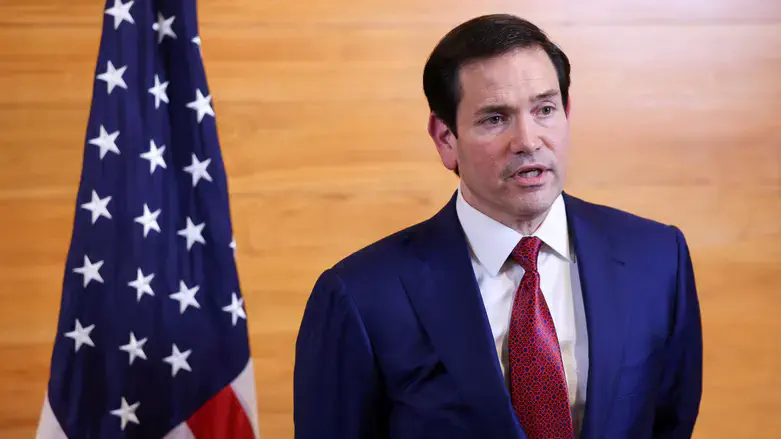
US Secretary of State Marco Rubio said on Wednesday that the United States will continue taking military action when necessary to protect its forces and international shipping from Iranian threats, while emphasizing that Washington’s primary means of pressuring Tehran remains economic.
Speaking to Fox News, Rubio said the central US objective remains to prevent Iran from obtaining a nuclear weapon.
"Well, first of all, I’ll remind everybody that, at the end, the core and central issue here is the following: Iran will never be allowed to possess a nuclear weapon, certainly not as long as President Trump is in office. So that’s first and foremost."
Addressing the situation in the Strait of Hormuz, Rubio said Iran has continued attacking commercial shipping and that the United States will target threats to its forces and global maritime traffic.
"So we will continue to target those things that pose an imminent threat to our forces and to global shipping in the straits. The straits will remain open, and they will not be under Iranian control. And that’s what you’re seeing the President carrying out right now."
Rubio also rejected the prospect of simply returning to previous arrangements with Tehran, arguing that Iran will continue to face economic pressure as long as it seeks a nuclear weapon.
"So as far as the differences in their system, here’s the bottom line - their economy’s a disaster. It was a disaster before all of this, right, because they - if you think about it, Iran - every penny they get, be it through sanctions relief or whatever - every penny they get, they don’t spend it on the Iranian people. They don’t spend that money on their country. They use that money to fund Hezbollah and Hamas and terrorist organizations and militias in Iraq to threaten us and threaten the world. If they spent a fraction, just half the money that they’re spending on these militias - if they spent it on their own people, the Iranian people would be better off."
He said the economic pressure is intended not only to punish Iran's leadership but also to restrict its ability to finance terrorist organizations and pursue a nuclear weapon.
"So they’re going to continue to feel the squeeze, because understand that this is not just about punishing Iran, the Iranian regime. It’s about preventing them from having access to money that will then be used to sponsor terrorism, which is what they’ve always done. They want money for two things - to sponsor terrorism and ultimately to have a nuclear weapon. And we can’t allow that to happen."
Rubio also warned countries against helping Iran circumvent US sanctions, saying Washington could impose sanctions on governments that assist Tehran in generating revenue.
"I think what ultimately happens though is - and the President’s been very clear - is no country should be helping Iran evade sanctions. No country should be out there helping them create mechanisms by which they can generate revenue that they will then use to sponsor terrorism and try to build a nuclear weapon. And if countries decide to do that, then we’re going to have to sanction them too."
Regarding Russia's support for Iran, Rubio said Moscow's position does not align with Washington's, but stressed that outside assistance would not prevent the United States from acting to defend itself.
"Nothing that anyone is providing Iran is in any way impeding our ability to act as necessary to protect the United States."
Rubio’s remarks follow the Treasury Department's announcement last week of “Operation Economic Outcast," an effort to isolate Iran economically.
At the same time, the Trump administration has kept military action on the table. US Secretary of War Pete Hegseth said last week that Washington has not ruled out military strikes in and around the Strait of Hormuz.
On Wednesday, the US struck Iranian military equipment near the Strait of Hormuz. Iran retaliated by launching ballistic missiles toward US military bases in Jordan.
Trump said the American strikes were carried out in response to Iranian activity in the Strait of Hormuz and an earlier missile attack against a US military base in Jordan, warning Iran of more powerful strikes if it retaliated.