

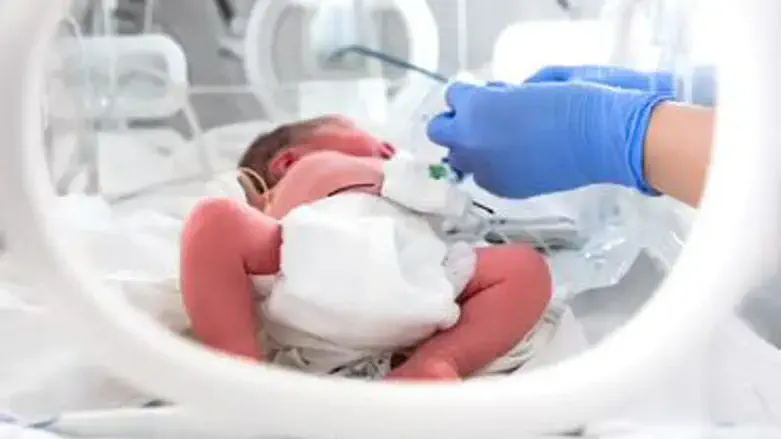
Teams from the Pediatric Emergency Medicine Department, the Neonatal Department, and the Neonatal Intensive Care Unit at Hadassah Mount Scopus Hospital succeeded in saving the lives of two babies who were brought to the hospital in critical condition after their parents disregarded medical recommendations.
In the first case, which occurred about two weeks ago, a baby was rushed to the hospital just one hour after being born at home. His parents quickly called Magen David Adom after realizing that he was in severe distress.
Upon his arrival at the hospital, doctors in the pediatric emergency room, together with the head of Hadassah's Neonatology Department, identified symptoms of asphyxia - insufficient blood supply to the brain - manifested by respiratory distress, bluish skin and abnormal neurological indicators.
The baby was urgently transferred to the Neonatal Intensive Care Unit and connected to a brain-wave monitor, which revealed that he was suffering from seizures. Following the diagnosis, doctors decided to place him under a therapeutic cooling protocol aimed at preventing secondary brain damage.
His condition is now stable, and he continues to receive treatment in the NICU.
Prof. Smadar Even Tov, director of Hadassah's Neonatology Department, addressed the incident, stressing: "Had he been born in the hospital, he would have received an immediate assessment and rapid resuscitation treatment in order to prevent further brain damage."
About a week later, another serious case occurred when a three-day-old baby girl was brought to the emergency room by her parents after massive bleeding was discovered in her diaper.
Doctors in the Pediatric Emergency Medicine Department quickly diagnosed the baby as being in shock, suffering from severe acidosis, and having extremely low hemoglobin levels that placed her in immediate danger of death.
Under the direction of the head of the Neonatology Division, the baby was urgently transferred to the Neonatal Intensive Care Unit.
Laboratory tests revealed that the bleeding had been caused by a severe vitamin K deficiency. Vitamin K is essential for preventing bleeding and is routinely administered to every newborn in Israel and around the world immediately after birth, but the baby had not received it following a decision by her parents.
The intensive care team began emergency treatment, including administering vitamin K and blood products, until her blood-clotting function stabilized and the bleeding stopped.
The hospital said this was one of the most severe cases it had encountered resulting from a vitamin K deficiency.
After her condition stabilized and she was no longer in danger, the baby was discharged home.