
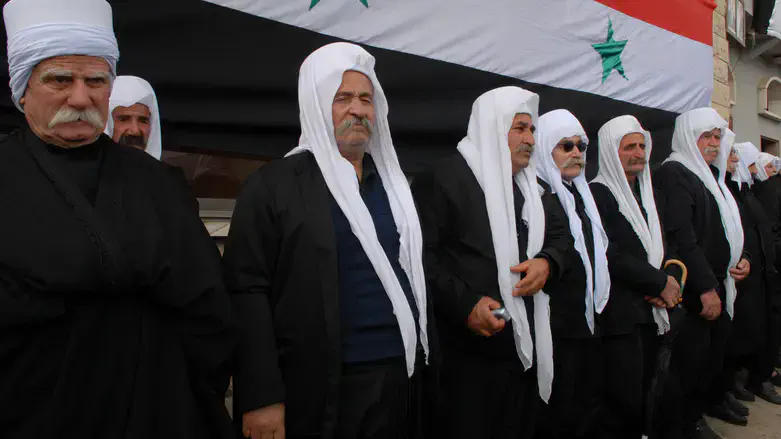
Ask Israelis about the Druze and the first thing they’ll refer to is the stellar performance of Druze soldiers in the Israel Defense Forces. Their role in the defense of Israel is known as “the covenant of blood," and is a point of pride in the Druze community. In towns and villages the Druze and Israeli flags fly side by side.
Moreover, at the behest of the Israeli and Golan Druze, the IDF entered Syria in 2025 and came to the Druze’s defense, despite an international outcry.
Many Israelis vacation in Druze towns and villages. These towns have all the culture and flavor (and bargains) of Muslim Israeli towns, without the hostility. Visitors see the difference between the two immediately; all street signs are in both Hebrew and Arabic. Unlike most Muslims living inside Israel, 94% of similar Druze identify as Israeli.
Who are the Druze? They are Arab in language, culture, and DNA, but It is their religion that is unique. Both the Druze and Muslims emphasize that the Druze religion, strictly monotheistic, is neither similar nor derived from Islam. What especially appeals to Jews is that the Druze claim descent from Jethro, the father-in-law of Moses. The most significant Druze celebration is the annual pilgrimage to Jethro’s tomb (in the Lower Galilee region of Israel west of Tiberias) -a national holiday in Israel.
In Jewish tradition Jethro’s descendants were the Kenites. Yael, the wife of Heber the Kenite, is a biblical heroine who cleverly executed Sisera, an oppressor of the Jews. The account highlights both the alliance of the Kenites with the Israelis and the assertive role of their women.
Of all sectors in today’s Israel, the Druze have among the highest percentage of enlistment in the IDF: over 80%. In the army many have advanced to senior ranks and have earned a reputation for courage under fire. At least 14 Druze IDF soldiers fell since October 7.
The Druze religion has few rituals, emphasizing moral behavior, temperance, and moderation, rather than rites. The Druze holy day is Thursday, separate from the Shabbat of Israelis, and the Friday of Muslims. They believe in reincarnation and a messianic Golden Age of justice and peace for all. Druze communities are very close-knit, since they accept no converts and cold-shoulder those who marry out.
In their youth Druze, both men and women are asked to decide whether they wish to become special initiates. This group, only 10% of their population, studies the secret texts and mysteries of the faith. These tenets are hidden, even from other Druze, however there is no stigma or lower status for those who choose not to join the initiates. The Druze have always prohibited polygamy and place women in a prominent, though not leadership, role.
Syria and Lebanon have larger Druze populations than Israel, but Druze presence in the Holy Land is ancient. Muslim generals enlisted Druze soldiers to fight the Crusaders. In 1165 the iconic Jewish traveler, Benjamin of Tudela, noted of the Druze “they love the Jews," a sentiment as rare in those times as it is today.
The relationship with Jews has not always been rosy. It is said that some of the secret texts are antisemitic. In the 18th and 19th centuries there were Druze riots in Israel in which Jewish homes were plundered and synagogues desecrated. But since before the establishment of the state, the Druze have proven themselves to be favorable to Israel. The feeling is mutual and the Druze have prospered as their numbers have increased ten times since 1948.
In the Six Day War of 1967, Israel conquered the Golan Heights, which has a large Druze population. Golan Druze were offered Israeli citizenship, but few signed up for it, remaining neutral in the complexity of loyalties to Syria. Israeli, Golan and Syrian Druze consider themselves all close relatives. Israel granted the Golan Druze special passports that allowed them to travel without declaring themselves citizens.
The balance changed in April of 2025 when the Druze in Syria were attacked by Sunni Bedouins who were soon joined by Syrian government forces and then by Islamists. There was a bloodbath. Israel was then seen as the only real defender of the Druze, wherever they lived, demonstrating that the covenant of blood exists on both sides.
On July 27, 2024, an Iranian-made rocket strike launched in Lebanon killed 12 Druze children and teenagers while they were playing soccer in the Druze town of Majdal Shams.
Of course, the Druze community wants the Israeli government to support it in other ways as well. The leadership has demonstrated and demanded that support for education, welfare, and employment opportunities should be increased. Of course, almost all other sub-communities in Israel (Kibbutzim, haredi Jews, Israeli Arabs, Bedouins) demand the same things. The difference is, the majority of Israelis support the Druze’s claim